In the world of modern wellness, efficiency is the ultimate currency. We optimize our sleep, our workouts, and our diets, so it’s no surprise that IV drip treatments have moved from the sterile confines of a hospital to the comfort of our living rooms. As a seasoned content creator who has spent over a decade navigating the nuances of the health and wellness industry, I’ve seen trends come and go. However, the shift toward proactive, medically directed hydration and nutrient therapy is more than just a passing fad—it’s a response to the “absorption gap” many of us face with traditional supplements.
But with popularity comes scrutiny. Is it safe to get an IV regularly? Does it actually work better than a multivitamin? Below, we dive deep into the most pressing questions surrounding the safety and efficacy of regular IV therapy.
1. How Does the Efficacy of IV Therapy Compare to Oral Supplements?
The most common question I encounter is whether “drinking your vitamins” is just as good. From a clinical standpoint, the answer lies in bioavailability. When you swallow a capsule, it must survive the acidic environment of the stomach and the “first-pass metabolism” of the liver. Research indicates that oral supplement absorption can range anywhere from 10% to 50% depending on your gut health.
In contrast, IV therapy delivers nutrients directly into the bloodstream, achieving 100% bioavailability. This is particularly vital for nutrients like Vitamin C. A study published in Global Advances in Health and Medicine noted that intravenous Vitamin C can reach blood concentrations up to 70 times higher than the same dose taken orally.
The “Bypass” Benefit
- No Digestive Distress: High doses of magnesium or Vitamin C can cause GI upset when taken orally. IV drips bypass the gut entirely.
- Immediate Hydration: Unlike water, which takes time to be absorbed through the small intestine, IV fluids provide an instant increase in plasma volume.
2. Is it Safe to Receive Regular IV Drip Treatments?
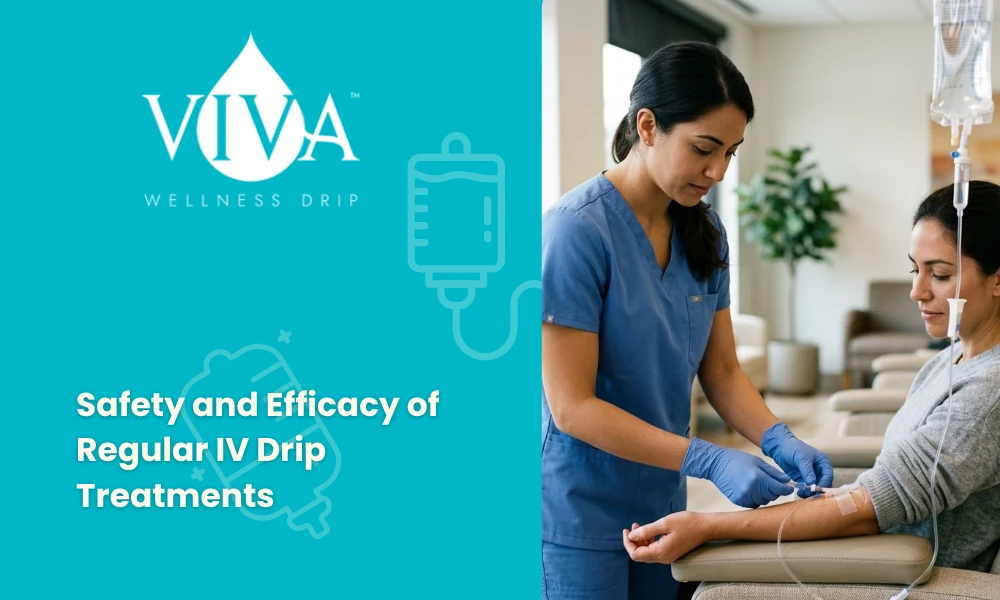
Safety is paramount, especially when a treatment becomes part of your routine. When administered by a qualified medical professional, IV drip treatments are remarkably safe. The key to long-term safety is the “medically directed” aspect.
At Viva Wellness Drip, every protocol is designed with a focus on physiological balance. We don’t just “hook you up”; we assess your health goals to ensure the infusion matches your body’s needs.
Professional Perspective: “The biggest ‘secret’ in the industry isn’t the vitamins themselves—it’s the rate of infusion. A ‘rushed’ drip can lead to vein irritation or a ‘vasovagal’ response (feeling faint). A seasoned provider knows that the best results come from a steady, monitored flow that respects your body’s circulatory limits.”
3. What Are the Potential Risks of Frequent Infusions?
While complications are rare, they are not impossible. Transparency is a cornerstone of trust. The primary risks associated with any needle-based therapy include:
- Infiltration: When the IV fluid accidentally enters the surrounding tissue instead of the vein. This is usually managed by simply stopping the drip and applying a compress.
- Vein Irritation (Phlebitis): Some nutrients, like high-dose potassium or certain B vitamins, can be “picky” about the vein size.
- Fluid Overload: This is why a medical history is vital. Individuals with underlying heart or kidney conditions must have their fluid volume carefully managed.
Safety Comparison: At-Home vs. Clinical Settings
| Feature | Mobile/At-Home (Viva Wellness) | Traditional Clinic/Bar |
| Comfort Level | High (Your own bed/couch) | Moderate (Shared space) |
| Pathogen Exposure | Low (Private environment) | Higher (Public waiting areas) |
| Personalization | High (1-on-1 attention) | Variable (High volume) |
| Safety Protocol | Medically Directed | Variable |
4. What Ingredients Are Actually in the Bag?
Understanding what you are putting into your body is the first step toward efficacy. Most high-quality wellness drips are built on a foundation of Lactated Ringer’s or Normal Saline, which mirror the body’s natural electrolyte balance.
Common Powerhouse Add-Ons:
- Glutathione: Often called the “Master Antioxidant,” it is essential for liver detoxification and skin brightening.
- NAD+: A coenzyme found in all living cells, used frequently for cellular repair and cognitive clarity.
- The Myers’ Cocktail: A classic blend of Magnesium, Calcium, B-Vitamins, and Vitamin C used for general fatigue and immune support.
For a full list of how these nutrients can be tailored to you, explore our service page.
5. How Often Should You Get a Drip for Optimal Results?

Consistency is key, but “more” isn’t always “better.”
- For Acute Recovery: (Jet lag, athletic recovery, or post-illness) A single session is often enough.
- For Chronic Wellness: (Immune support or skin health) Many clients find a “sweet spot” of once every 2 to 4 weeks.
If you are looking for localized care in specific regions, such as our Edmonton mobile service, our local providers can help you establish a cadence that fits your specific lifestyle and climate needs.
Hard-Earned Lessons from the Field
In my years covering this space, the most important lesson I’ve learned is that hydration is the foundation of all beauty and performance. You can have the most expensive vitamins in the world, but if your cells are dehydrated (hypertonic), they cannot effectively utilize those nutrients. Always ensure your drip starts with a high-quality electrolyte base.
FAQs
1. Does IV therapy hurt?
Most clients describe the sensation as a “quick pinch” during the initial placement. Once the catheter is in, the treatment is painless. Many people use the 30–45 minute session to nap, read, or catch up on emails.
2. How long do the effects of an IV drip last?
While the immediate “boost” (hydration and energy) is felt within hours, the vitamins can stay in your system and support cellular function for 2 to 3 weeks.
3. Can I get an IV drip if I’m pregnant or nursing?
Certain infusions are safe and even beneficial, but this must be cleared by your OB-GYM first. We always prioritize maternal and fetal safety above all else.
4. Are there any side effects after the treatment?
The most common side effect is a small bruise at the site of entry. Some clients report a “vitamin taste” in their mouth or a slight change in the color/smell of their urine as the body processes the excess water-soluble vitamins.
5. Why can’t I just drink more water?
Oral hydration is essential, but it takes hours for water to pass through the digestive tract and reach your cells. IV therapy provides instant extracellular and intracellular hydration, which is vital when you are significantly depleted.