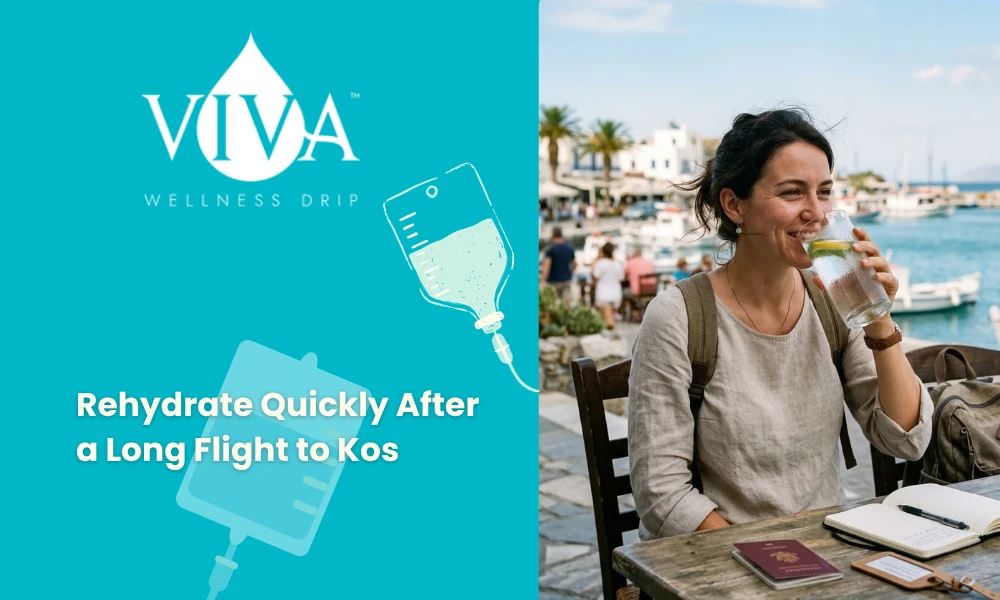
There’s a moment every traveler knows: you step off the plane in Kos, the Aegean sun is blazing, the harbour is postcard-perfect — and you feel completely wrecked. Dry mouth, heavy legs, a dull headache that no amount of airplane water seemed to fix. That’s not jet lag alone. That’s dehydration, and it starts long before you land.
We’ve worked with enough post-flight clients here in Kos to know this pattern well. The guests who rehydrate strategically within the first few hours hit the beach by evening. Those who don’t spend day one recovering in their hotel room. Here’s exactly what to do — ranked by how fast each method works.
1. Understand Why the Flight Drained You in the First Place
You can’t fix what you don’t understand. Most people assume they just need “more water” after flying, but the mechanism is more specific than that.
Cabin humidity on most commercial aircraft sits between 10% and 20% — comparable to a desert environment. At home, indoor humidity hovers around 30–60%. That extreme dryness means your body loses moisture continuously through your skin and respiratory tract whether you feel thirsty or not. Add to that the reduced oxygen partial pressure at cruising altitude, which increases breathing rate and accelerates fluid loss further.
In a standard airliner, passengers lose roughly eight ounces of water per hour just through normal breathing. On a four-hour flight from London to Kos, that’s more than a litre gone before you’ve even touched Greek soil — and that’s before factoring in any coffee, wine, or in-flight alcohol.
The Hard-Earned Lesson
Plain water alone won’t cut it after a long-haul flight. Why? Because you’ve lost electrolytes alongside that fluid — sodium, potassium, and magnesium chief among them. Drinking large amounts of plain water without electrolyte replacement can actually dilute your blood sodium temporarily, making symptoms worse rather than better.
2. Rehydrate Orally — But Do It Smarter
The first thing most people reach for is a bottle of water, which is the right instinct done the wrong way. Here’s how to make oral rehydration actually work:
- Choose electrolyte drinks over plain water. Products with sodium, potassium, and a small amount of glucose use active transport to pull fluid into your cells far more efficiently.
- Avoid coffee and alcohol for the first two hours. Both are diuretics that compound the dehydration your body is already fighting.
- Eat water-rich foods. Cucumber, watermelon, and tomatoes (fortunately abundant in Greek cuisine) provide both fluid and trace minerals.
- Sip consistently, don’t chug. Rapid fluid intake often leads to rapid excretion. Small, regular sips over 30–60 minutes absorb more effectively.
This approach helps, but oral rehydration has a ceiling — it depends entirely on how well your gut is absorbing, which is often compromised after long flights due to altitude-related changes in gastrointestinal motility.
3. Get Into the Shade and Cool Down Immediately
Landing in Kos in summer means stepping from a pressurised cabin into 35°C heat. Your body, already running a fluid deficit, immediately ramps up perspiration to thermoregulate. Dehydration accelerates fast in these conditions.
One of the simplest and most overlooked steps is to get out of direct sun for at least 30–60 minutes after landing. Sit in your air-conditioned transfer, check into your accommodation, close the blinds. Give your body a chance to stabilise before you throw heat stress into the mix.
Professional Perspective: “We see a predictable pattern with guests who arrive in high summer. Those who spend 20 minutes in the sun before reaching their hotel often present with moderate dehydration symptoms by mid-afternoon — headache, fatigue, reduced concentration. The heat and the flight are a compounding combination, not an additive one. Shade is an underrated intervention.”
4. Skip the Minibar, Prioritise Minerals
Room service and minibar reflexes are real after a long journey. But reaching for an ice-cold beer or a sugary soft drink is one of the most counterproductive things you can do in the first two hours post-flight.
What your body actually needs in this window:
| What to Choose | Why It Helps | What to Avoid | Why It Hurts |
| Electrolyte sachets in water | Replaces sodium, potassium, magnesium | Alcohol | Diuretic, worsens deficit |
| Coconut water | Natural electrolytes + potassium | Caffeinated drinks | Increases fluid excretion |
| Greek yoghurt or olives | Sodium, probiotics, trace minerals | High-sugar juices | Causes osmotic fluid shift |
| Still water, sipped slowly | Core fluid replacement | Sparkling water in excess | Can cause bloating, slows intake |
The minibar can wait. Your first 90 minutes in Kos should be about restoration, not reward.
5. Consider IV Drip Therapy for Rapid, Measurable Recovery
For travellers who want to genuinely feel restored — not just less bad — intravenous hydration therapy delivers results that oral methods simply can’t match on speed.
When fluids, electrolytes, and vitamins are delivered directly into the bloodstream, absorption is 100%. There’s no gut absorption variable, no waiting period, no guesswork. A targeted drip bypasses the gastrointestinal system entirely and begins restoring cellular hydration immediately.
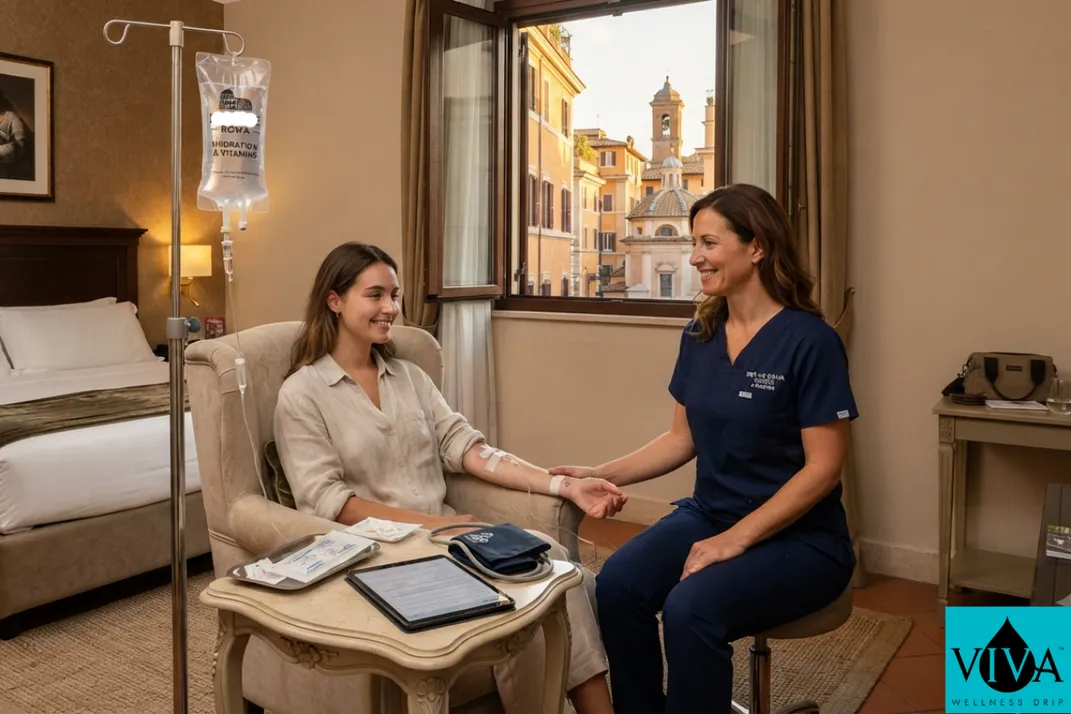
We offer mobile IV drip therapy in Kos delivered directly to your hotel or villa — no clinic visit, no waiting room, no disruption to your travel plans. Our team comes to you, sets you up comfortably, and you’re typically feeling restored within 30–45 minutes.
Our Immune Boost IV drip is particularly popular with post-flight guests — combining high-dose Vitamin C, zinc, and B-complex with a full electrolyte rehydration base. It addresses not just dehydration but the immune suppression that long-haul flying is known to cause. Browse our full range of drip treatments here.
For guests who want rapid recovery without spending half their first day in bed, this is consistently the most effective option we offer.
6. Rest, Then Rehydrate Again Before You Sleep
Post-flight exhaustion and dehydration are linked in a feedback loop. Research indicates that every 1% of body water lost extends jet lag recovery time by approximately 20%. That means your sleep quality on night one directly affects how quickly you adjust to local time and feel human again.
Before bed on your arrival night, drink another 400–500ml of electrolyte water, avoid alcohol, and keep the room cool. Your body does its deepest cellular repair during sleep — give it the hydration it needs to do that work effectively.
If you’re staying multiple days and want to start your trip from a position of genuine vitality rather than just managing symptoms, a Viva Wellness Drip session on day one sets that foundation in a way that no amount of water and sleep can replicate. Our Immune Boost drip and hydration protocols are specifically designed for exactly this kind of recovery window.
FAQs
Q: How long does it take to rehydrate after a long-haul flight?
Oral rehydration typically takes 4–8 hours to meaningfully restore fluid balance. IV therapy achieves the same result in 30–45 minutes by delivering fluids and electrolytes directly into the bloodstream.
Q: Is drinking water enough to rehydrate after flying?
Plain water alone is insufficient after flying. You need electrolytes — particularly sodium and potassium — alongside fluids to restore proper cellular hydration and prevent dilutional imbalances.
Q: What are the best electrolyte drinks for post-flight recovery?
Look for drinks containing sodium, potassium, and magnesium with low sugar content. Oral rehydration sachets and coconut water are strong choices. Avoid sports drinks with high sugar concentrations.
Q: Does flying to Kos in summer make dehydration worse?
Yes significantly. The transition from low-humidity cabin air to Kos’s Mediterranean summer heat compounds fluid loss rapidly. Seeking shade and rehydrating before sun exposure is critical on arrival.
Q: Can I get IV drip therapy delivered to my hotel in Kos?
Yes. Viva Wellness Drip provides mobile IV therapy directly to hotels, villas, and private accommodation throughout Kos — no clinic visit required.