Cycling isn’t a leisure activity in Amsterdam — it’s the primary way most residents get to work, run errands, and move through daily life. That means the physical demands of biking accumulate quietly across a normal week, in a way that a single training ride wouldn’t. Add the city’s damp, changeable weather and the cobblestone stretches along many of Amsterdam’s older canal routes, and daily cycling here is a more physically demanding habit than most residents give it credit for.
That’s where IV drip Amsterdam services fit into a cyclist’s routine. Rather than treating fatigue as an inevitable part of city living, mobile IV therapy Amsterdam delivers medically-directed hydration and recovery care directly to the home or office, supporting the body’s actual physical output.
Why Daily Cycling in Amsterdam Adds Up Faster Than Expected
A daily commute by bike might only take twenty or thirty minutes each way, but across a full work week, that consistent physical output compounds in a way that occasional exercise doesn’t. Add Amsterdam’s damp climate, which increases the effort required to stay warm while cycling through cooler months, and the cobblestone sections of the Grachtengordel that demand more core engagement and grip strength than smooth pavement, and daily cyclists are managing more cumulative physical stress than they typically realize.
In our experience working with Amsterdam’s cycling community, the pattern shows up gradually rather than all at once — residents notice fatigue building over weeks rather than after any single ride, which makes it easy to attribute to something other than the accumulated physical demand of daily cycling. Isotonic IV fluids paired with magnesium address that accumulated deficit directly, offering a faster recovery path than rest alone typically provides.
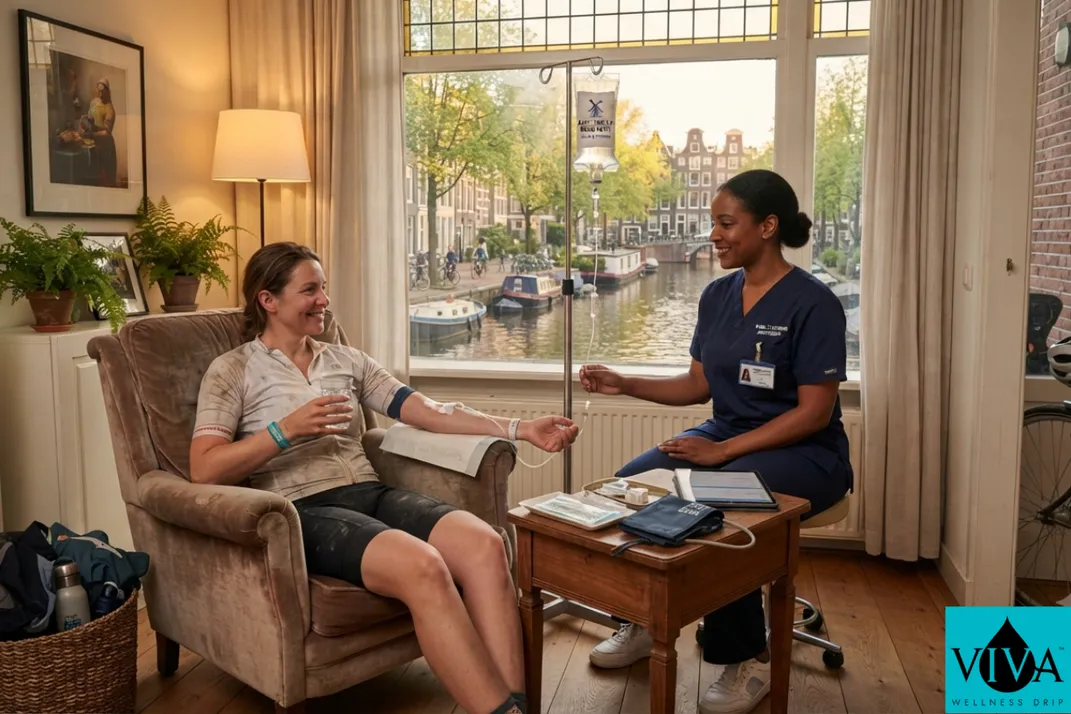
What a Cyclist’s IV Drip in Amsterdam Includes
The most requested formulation for Amsterdam’s cycling community pairs isotonic saline with magnesium, which helps ease the muscle tension and cramping that come from sustained daily cycling. Electrolyte replenishment and B-complex vitamins are typically added to support consistent energy levels across a demanding commuting and social schedule, while vitamin C supports immune resilience during Amsterdam’s damp autumn and winter months.
Supporting Recreational and Long-Distance Cyclists
Beyond daily commuters, Amsterdam is also home to a strong recreational cycling community that ventures beyond the city into the surrounding polder landscape on weekends. For this group, amino acids are often added to the formulation, supporting muscle repair after longer rides that place more sustained demand on the body than a typical urban commute.
Timing a Session Around a Cycling Routine
The most useful timing for an IV drip Amsterdam session depends on the pattern of physical activity. A recurring session every two to three weeks works well for daily commuters managing cumulative fatigue, while a single post-ride session tends to suit recreational cyclists recovering from a specific weekend outing into the countryside.
Choosing the Best Mobile IV Drip in Amsterdam
According to research published through the National Institutes of Health, intravenous rehydration corrects fluid and electrolyte deficits significantly faster than oral rehydration methods, which matters for a cycling community that rarely takes a full rest day from getting around the city. Every session should begin with a proper health screening, regardless of how routine a post-ride drip might feel to a daily commuter.
The team at Viva Wellness Drip administers every infusion through registered nurses, delivering medically directed IV therapy directly to your location — a canal house apartment in the Grachtengordel, a hotel suite near Museumplein, or anywhere across the city’s compact and navigable geography. Explore the full menu of IV drip services to find the cyclist-focused formulation that matches your routine.
Amsterdam’s identity is built around cycling, but that same identity carries a real physical cost that most residents absorb quietly. Mobile IV therapy is one of the more practical ways to keep pace with a lifestyle built around two wheels.
For a city where cycling isn’t optional but simply how life gets done, treating recovery as a genuine part of that routine — rather than something reserved for athletes in training — reflects a more accurate picture of what daily physical output actually demands of the body over time.
Frequently Asked Questions
How does daily commuting by bike compare to occasional exercise in terms of recovery needs?
Daily cycling creates a cumulative physical demand across the week that occasional exercise doesn’t, meaning recovery needs build gradually rather than spiking after a single ride.
Is IV therapy helpful for muscle soreness from cycling on Amsterdam’s cobblestones?
Yes. Magnesium, commonly included in cyclist-focused formulations, helps ease the muscle tension and cramping associated with the additional strain cobblestone surfaces place on the body.
How often should regular cyclists in Amsterdam book IV therapy?
Many daily commuters schedule sessions every two to three weeks as ongoing support, rather than waiting until fatigue becomes noticeable.
Can Viva Wellness Drip travel to canal house apartments in central Amsterdam?
Yes. The team delivers medically-directed IV therapy throughout Amsterdam, including canal house apartments in the Grachtengordel and surrounding neighborhoods.
Is IV therapy useful for recreational cyclists riding beyond the city into the countryside?
Yes. A formulation with added amino acids supports muscle repair after longer recreational rides, which place more sustained demand on the body than a typical urban commute.