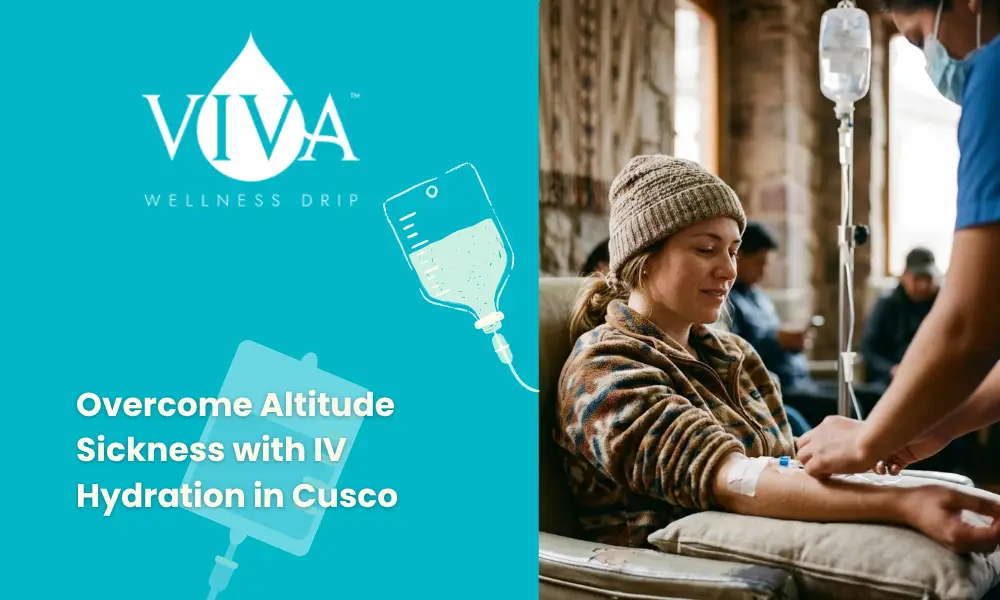
Touching down at Alejandro Velasco Astete International Airport in Cusco means stepping directly into the heart of the ancient Inca Empire. It also means instantly introducing your body to an elevation of 3,399 meters (11,152 feet) above sea level. For many eager travelers, the initial excitement is quickly eclipsed by a throbbing headache, overwhelming fatigue, and a distinct wave of nausea.
This isn’t just a minor travel inconvenience; it is a clinical condition known as Acute Mountain Sickness (AMS). While local traditions will heavily steer you toward drinking hot mugs of coca tea, seasoned wellness professionals know that oral intake alone often struggles to keep pace with the dramatic physiological shifts happening inside your cells at high elevations.
When you are suffering from hypobaric hypoxia (low atmospheric oxygen), every hour spent waiting to acclimate feels like a wasted day of your vacation. Let’s look at the science behind high-altitude physiology and explore exactly how optimizing your cellular hydration can completely change your experience.
1. The Physiological Reality of the “Cusco Crash”
When you ascend to a high altitude rapidly, the drop in barometric pressure reduces the number of oxygen molecules per breath. Your body’s immediate compensatory mechanism is hyperventilation to pull in more oxygen. While this initial response protects your vital organs, breathing faster and deeper rapidly expels carbon dioxide ($CO_2$) from your lungs.
This sudden drop in blood carbon dioxide causes a shift known as respiratory alkalosis—a state where your blood pH becomes overly alkaline. To correct this, your kidneys are forced to rapidly excrete bicarbonate through frequent urination, which strips away your baseline hydration levels. This process is further compounded by the exceptionally dry mountain air, which vastly increases your total insensible fluid loss simply through breathing.
By the time you feel that signature, vice-like headache, your body is battling a dangerous crosscurrent of oxygen deprivation and accelerated dehydration.
2. The Oral Hydration Bottleneck vs. Cellular Bioavailability
The standard advice for arriving travelers is always to drink more water. However, under the physiological stress of AMS, your gastrointestinal tract experiences a dramatic reduction in motility. This often leads to altitude-induced anorexia (loss of appetite) and severe nausea.
When your stomach is upset, chugging liters of water can irritate your GI lining further, leading to vomiting and worsening your condition. This is where the core benefit of cellular bioavailability comes in. By bypassing the digestive system entirely, an intravenous line introduces fluids, balanced electrolytes, and targeted vitamins directly into your bloodstream. Your cells receive immediate access to the building blocks they need to begin normalizing your blood chemistry, bypassing the oral bottleneck completely.
3. Restoring Intravascular Osmolarity Safely
One of the most tightly guarded professional secrets among travel physicians is managing osmolarity—the concentration of solutes in your blood plasma. When you are severely dehydrated from high-altitude exposure, your blood volume drops, and your blood becomes hypertonic (overly concentrated). This forces water out of your tissues, worsening cell fatigue and expanding cerebral blood vessels, which intensifies that agonizing altitude headache.
Using a precisely formulated IV treatment restores your intravascular volume within minutes. It rebalances your plasma concentration so that your red blood cells can circulate more freely, maximizing the delivery of whatever oxygen is available to your starving tissues. To explore how targeted micronutrients can be tailored to your wellness needs, you can browse through our comprehensive service options to see the variety of support structures available.
4. Why Vitamin and Antioxidant Infusions Accelerate Recovery
True recovery from altitude sickness involves more than just standard saline; it requires neutralizing the sudden cascade of free radicals caused by hypoxia. When your tissues are deprived of optimal oxygen, cellular stress spikes, generating significant oxidative damage.
Including high-dose antioxidants, such as Glutathione, alongside a robust blend of B-vitamins and Vitamin C directly targets this oxidative stress. Vitamin C acts as a powerful free radical scavenger, while B-complex vitamins act as mandatory coenzymes in cellular energy production, essentially jumpstarting your mitochondria to produce cellular energy ($ATP$) despite the low-oxygen environment.
For travelers who want a comprehensive, all-in-one recovery package designed to address full-body depletion, our Myers’ Cocktail infusion provides a highly effective blend of magnesium, calcium, B vitamins, and Vitamin C to rapidly kickstart your recovery.
5. The Luxury and Safety of At-Home Mobile Care
When you are dizzy, lightheaded, and dealing with a throbbing migraine, the absolute last thing you want to do is navigate an unfamiliar city to find a medical clinic. Sitting in a sterile waiting room while feeling physically miserable can amplify travel anxiety and elevate your heart rate, which only increases your body’s oxygen demand.
Professional Perspective: True clinical recovery happens best when the patient is in a low-stress, resting state. Unnecessary physical exertion during acute mountain sickness can increase pulmonary artery pressure, potentially worsening your symptoms.
At Viva Wellness Drip, we specialize in eliminating that friction entirely. Our premium, medically directed mobile IV service brings the entire treatment directly to your hotel room or accommodation. You can comfortably relax in bed while a licensed healthcare professional administers your tailored vitamin infusion.
Whether you are traveling through historic high-altitude destinations or seeking specialized wellness support back home in coastal cities like Miami, our focus remains firmly on delivering maximum comfort, absolute medical safety, and personalized health goals straight to your doorstep.
Comparing Altitude Recovery Methods
| Feature / Metric | Standard Oral Hydration | Mobile IV Hydration Therapy |
| Absorption Speed | Slow (requires 1–2 hours for GI tract transit) | Immediate (100% direct bloodstream entry) |
| Bioavailability | Limited ($50\%\text{–}60\%$ due to digestive breakdown) | Maximum ($100\%$ cellular availability) |
| Nausea Tolerance | Very Poor (frequently triggers vomiting) | Perfect (bypasses stomach completely) |
| Physical Effort | High (requires forcing down continuous fluids) | Zero (administered while you rest in bed) |
Practical Tips for Your First 24 Hours in Cusco
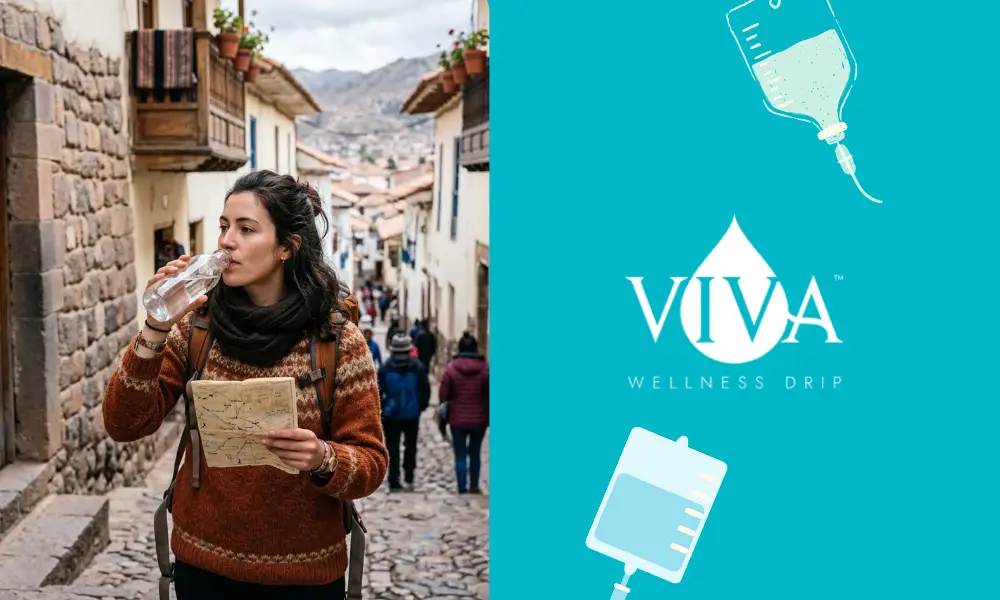
To ensure your trip to Peru remains unforgettable for the right reasons, we recommend implementing a strict arrival protocol:
- Schedule a Preventive Drip: Booking your IV session for the afternoon of your arrival can stop severe symptoms before they completely manifest.
- Avoid Subcutaneous Absorption Delays: Do not rely on sports drinks; when you are dehydrated, your body diverts blood flow away from your stomach, severely delaying oral absorption.
- Rest Completely: Avoid long walking tours on day one. Let your body dedicate its limited energy to blood pH correction.
No matter where your adventures take you, maintaining your underlying cellular health is the key to enjoying the journey. For more information about our global mobile wellness offerings, feel free to visit the Viva Wellness Drip to find a dedicated team near you.
FAQs
Can IV hydration completely cure altitude sickness?
While IV hydration is highly effective at reversing acute dehydration, balancing blood osmolarity, and treating the primary symptoms of mild-to-moderate AMS (like headaches and nausea), the ultimate cure for altitude sickness is time for acclimatization or descending to a lower elevation. IV therapy dramatically speeds up your comfort and recovery during that transition window.
Is it safe to get an IV infusion in my hotel room?
Yes. When performed by certified, licensed medical professionals using sterile, single-use equipment, mobile IV therapy is perfectly safe. A proper medical intake screening is conducted prior to your infusion to ensure your treatment is tailored specifically to your medical history and current health needs.
How long does a mobile IV therapy session take?
A typical IV drip therapy session takes roughly 45 to 60 minutes. Our medical professional will remain with you throughout the duration of the infusion to monitor your comfort and ensure a seamless, relaxing experience.
Should I choose oral electrolytes over IV therapy?
If you are completely healthy and experiencing no symptoms, oral fluids are fine for maintenance. However, if you are already experiencing nausea, vomiting, or a severe headache, your digestive system cannot absorb oral liquids efficiently. IV therapy is superior because it provides immediate relief with 100% absorption.
Can I get an IV drip if I am already taking altitude medications like Diamox?
Yes, in most cases. Acetazolamide (Diamox) works by forcing your kidneys to excrete bicarbonate to correct blood pH, which inherently increases your urination and risk of dehydration. IV hydration safely replaces those lost fluids and essential electrolytes without interfering with how your medication works.