September is peak vindima, the grape harvest season, across the Douro Valley outside Porto. Many wineries invite visitors to participate directly — picking grapes on steep terraced hillsides, and in some traditional houses, treading grapes by foot in stone lagares. It’s an unforgettable experience, and a genuinely physical one that deserves real recovery planning.
Before the Harvest: Know What Grape Picking Actually Involves
Grape picking means hours of repetitive bending, reaching, and carrying baskets across the Douro’s famously steep terraced vineyards, often under direct September sun with limited shade. Visitors expecting a leisurely wine country activity are frequently surprised by how much physical labor a few hours of picking actually requires.
During the Harvest: Grape Treading Adds Another Layer
At wineries that maintain the traditional practice, grape treading in stone lagares involves hours of standing and rhythmic stomping, a sustained physical activity that surprises many participants who expect it to be a brief, novelty experience rather than genuine exertion.
After a Harvest Day: The Wine Tasting That Follows
Harvest days at Douro Valley wineries typically end with tastings celebrating the day’s work, adding alcohol’s diuretic effect on top of a day already spent in physical labor and sun exposure — a combination that produces more fatigue than either factor alone.
The Douro Valley’s Terrain Makes Everything Harder
The Douro Valley’s UNESCO-recognized landscape is defined by its dramatic terraced hillsides, carved into steep slopes over centuries specifically to allow grape cultivation on terrain that would otherwise be unusable for agriculture. This terracing is what makes the region visually spectacular, but it’s also precisely what makes harvest work there more physically demanding than grape picking in a flatter wine region. Workers and visiting participants alike navigate narrow terraces, uneven stone walls, and steep inclines between rows, all while carrying full baskets of grapes.
The valley’s microclimate compounds this challenge further. The Douro’s steep-sided river gorge traps heat effectively, often making harvest days here noticeably warmer than the coastal temperatures visitors experience back in Porto, even though the two locations sit less than two hours apart by car. Visitors who check Porto’s weather forecast before heading inland for a harvest day often find themselves considerably underprepared for how much hotter and more intense the sun feels once they’re actually working the terraces.
Why Visitors Underestimate the Experience
Wineries that offer harvest participation to visitors generally frame it as a cultural and culinary experience first, and a physical activity second, which shapes expectations before visitors even arrive. Marketing materials tend to emphasize the romance of the harvest — the tradition, the scenery, the celebratory tasting afterward — rather than the genuine manual labor involved, which means many participants show up dressed and hydrated for a leisurely wine country visit rather than several hours of active fieldwork.
This mismatch between expectation and reality is part of why harvest day fatigue catches so many visitors off guard. A traveler who wouldn’t think twice about preparing for a hike or an active excursion elsewhere often approaches a Douro Valley harvest day with far less physical readiness, simply because the setting and framing suggest something closer to a garden party than genuine agricultural work. By the time the tasting glasses come out at the end of the day, most first-time participants have already logged more physical exertion than they anticipated when they booked the experience.
Returning to Porto: What a Recovery Session Includes
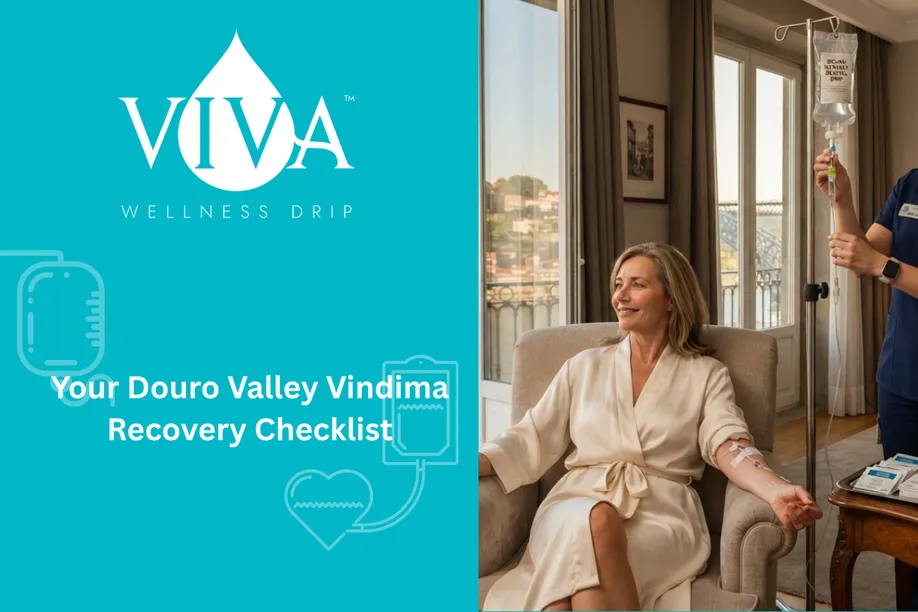
The most requested formulation for vindima recovery pairs isotonic saline with magnesium, addressing the muscle fatigue from picking and treading, alongside electrolyte replenishment for the day’s sun exposure and glutathione supporting recovery from the day’s wine tastings. You can browse the complete IV drip menu for the full range of formulations.
How to Book in Porto After a Harvest Day
The team at Viva Wellness Drip sends a registered nurse directly to hotels in Porto’s Baixa district and beyond, timed for whenever you return from the Douro Valley. For groups participating in a harvest experience together, group bookings can be arranged for the full party. According to the World Health Organization’s guidance on hydration, physical labor combined with heat exposure significantly increases fluid needs beyond typical daily intake, precisely the combination a day of grape harvest work produces. The Mayo Clinic’s overview of dehydration and MedlinePlus’s guidance on dehydration both offer further detail on how sustained physical activity compounds fluid loss over the course of a working day.
Frequently Asked Question
When is grape harvest season in the Douro Valley?
The vindima, or grape harvest, typically takes place in September, when many Douro Valley wineries invite visitors to participate in picking and, at some traditional houses, grape treading.
Is grape picking really physically demanding, or is it more of a novelty activity?
It’s genuinely demanding. Picking involves hours of repetitive bending and carrying on steep terraced hillsides, often under direct sun, and surprises many first-time participants.
Can Viva Wellness Drip travel to hotels in Porto after a day in the Douro Valley?
Yes. The team serves hotels and accommodations throughout Porto, including the Baixa district, timed for whenever visitors return from harvest activities.
Should groups participating in a harvest experience book together?
Yes. Group bookings are a practical option for groups who spent the day picking or treading grapes together.
What’s the best time to book a session after a vindima day?
Most visitors schedule a session the same evening after returning to Porto, addressing the day’s physical labor, sun exposure, and wine tasting before the next day’s plans.