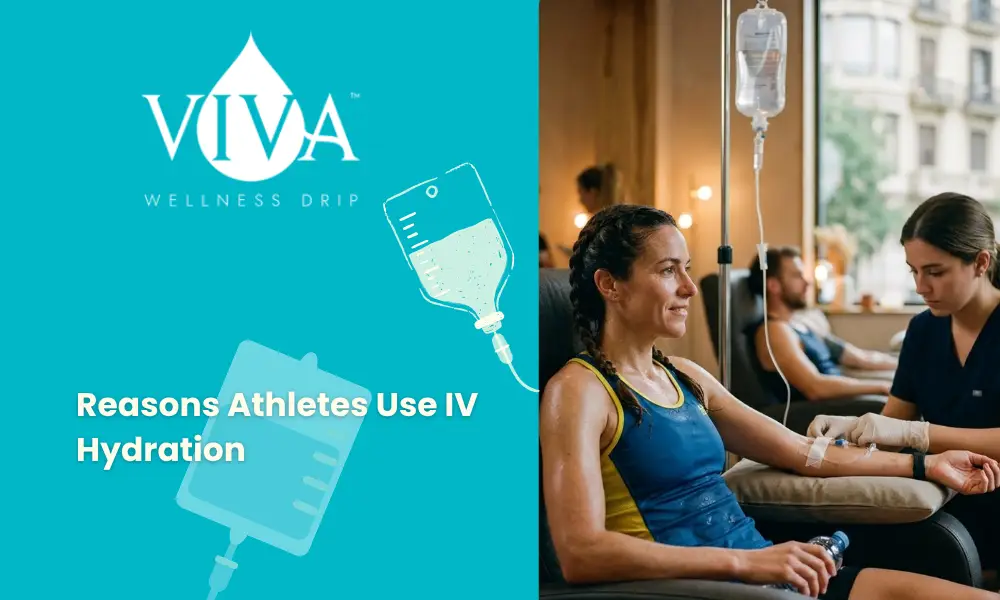
Barcelona’s mix of Mediterranean heat, a serious running and cycling culture, and a calendar packed with races has made it one of Europe’s more athletically demanding cities to train in. Having worked alongside providers serving competitive and recreational athletes here, these are the reasons IV hydration keeps coming up in training conversations.
1. Mediterranean Heat Accelerates Fluid Loss During Training
Barcelona’s summer humidity makes sweat evaporation less efficient, which means athletes lose more fluid than they realize during outdoor sessions, particularly along the beachfront or up in Collserola.
Training scenarios where this matters most
- Marathon and half-marathon training blocks
- Cycling groups tackling coastal or mountain routes
- Triathletes combining swim, bike, and run sessions in one day
2. Faster Electrolyte Replacement Than Sports Drinks Alone
While oral electrolyte drinks work well for moderate exercise, athletes pushing through longer or more intense sessions sometimes need faster replacement than digestion allows. A Hydro Boost drip delivers that directly into the bloodstream.
3. Recovery Between Race Weekends
Barcelona’s crowded race calendar means some athletes are managing back-to-back events. Quicker rehydration between races shortens the recovery window before the next start line.
4. Immune Support During Heavy Training Blocks
Intense training can temporarily suppress immune function, and a Super Immune Boost drip is a common choice for athletes trying to stay healthy through demanding weeks.
5. Convenience Around Tight Training Schedules
Between early morning sessions and work commitments, athletes often don’t have time for a clinic visit. A mobile nurse visit fits into a training schedule far more easily than driving across the city.
6. Support for Heat Acclimatization
Athletes preparing for races in hotter climates sometimes use IV hydration as part of a broader heat-acclimatization strategy, alongside gradual heat exposure training.
7. A Data-Backed Approach, Not Just a Trend
Sports medicine research has long supported the role of proper fluid and electrolyte replacement in exercise performance and recovery, giving athletes a genuine evidence base rather than just anecdotal appeal.
| Reason | Training Context | Typical Formula |
|---|---|---|
| Heat-driven fluid loss | Summer outdoor training | Hydro Boost |
| Fast electrolyte replacement | Long or intense sessions | Electrolyte-focused |
| Race-to-race recovery | Packed race calendar | Hydro Boost |
| Immune support | Heavy training blocks | Immune-focused |
“Professional Perspective: “Serious athletes in Barcelona treat hydration the way they treat any other part of training — with a plan, not an afterthought. That mindset is exactly why IV therapy has become part of the routine for so many of them.””
Viva Wellness Drip sends registered nurses throughout Barcelona, with formula details available on our services page. For research-backed guidance on fluid replacement during exercise, AMSSM’s fluid guidelines offer practical detail, and the Mayo Clinic’s dehydration overview covers the broader risks of falling behind on fluids. Whatever your training block looks like in Barcelona, Viva Wellness Drip can help you build hydration into the plan.
FAQs
Why do athletes in Barcelona use IV hydration instead of just sports drinks?
IV fluids are absorbed directly into the bloodstream, which can replace fluids and electrolytes faster than oral drinks during intense or prolonged training.
Is IV hydration useful for recovering between race weekends?
Yes, faster rehydration can shorten the recovery window for athletes managing a packed race calendar.
Can IV therapy help with immune support during heavy training?
Immune-focused formulas are a common choice for athletes trying to stay healthy through demanding training blocks, alongside proper rest and nutrition.
Is there research behind using IV hydration for athletic performance?
Sports medicine organizations have long supported proper fluid and electrolyte replacement for performance and recovery, which underpins the broader approach.
How often do competitive athletes typically use IV hydration?
This varies widely by individual and training load, with some using it occasionally around key events and others incorporating it more regularly during peak training blocks.