In the health and wellness landscape of 2026, the conversation has shifted from “what” vitamins we take to “how” we take them. While oral supplements have been the standard for decades, a growing body of clinical evidence and a deeper understanding of human physiology have highlighted a significant bottleneck in traditional nutrition: bioavailability.
For residents in Edmonton looking to optimize their recovery, immunity, or energy, understanding the science of how nutrients reach the cellular level is crucial. This guide breaks down why IV therapy is not just a trend, but a medically superior delivery system for high-impact wellness.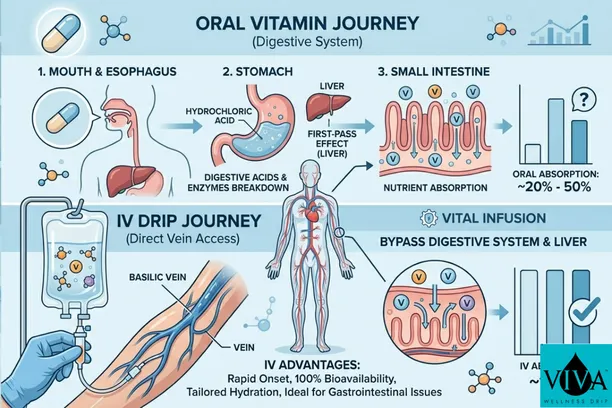
What is Bioavailability?
In pharmacology and nutritional science, bioavailability refers to the proportion of a nutrient that enters the systemic circulation and is made available to the cells for use. It isn’t enough to simply ingest $1,000$ mg of Vitamin C; the real question is how much of that $1,000$ mg actually reaches your tissues.
When you take a pill, the bioavailability is often surprisingly low—sometimes as little as $0% to 30%. In contrast, intravenous administration is the only delivery method that offers 100% bioavailability by definition.
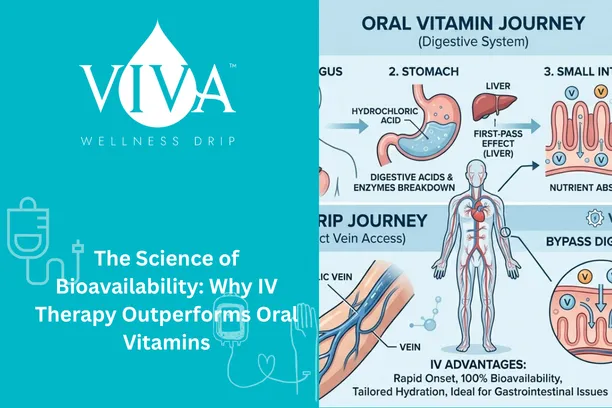
The Obstacle Course: The Journey of an Oral Vitamin
To understand why oral vitamins underperform, we must look at the “obstacle course” of the human digestive system.
1. The Acidic Environment of the Stomach
The moment a vitamin pill or capsule hits your stomach, it is met with hydrochloric acid. This harsh environment is designed to break down food, but it can also denature sensitive vitamins and antioxidants. For example, Glutathione—the body’s master antioxidant—is almost entirely destroyed by stomach enzymes, making oral glutathione pills largely ineffective for raising systemic levels.
2. Intestinal Absorption Barriers
Once through the stomach, nutrients enter the small intestine. Here, they must pass through the intestinal wall to enter the bloodstream. This process relies on specialized “transporter proteins.” These transporters can become saturated quickly. If you take a massive dose of oral Vitamin C, your body simply runs out of “gatekeepers” to move it into the blood, and the excess is excreted, often causing digestive distress.
3. The “First-Pass Effect” (The Liver Filter)
This is the most significant hurdle. Nutrients absorbed by the gut are sent directly to the liver via the portal vein. The liver acts as a high-security filter, metabolizing and “screening” substances before they can reach the rest of the body. This first-pass metabolism significantly reduces the concentration of nutrients before they ever reach your heart, brain, or muscles.
The IV Advantage: Direct Cellular Saturation
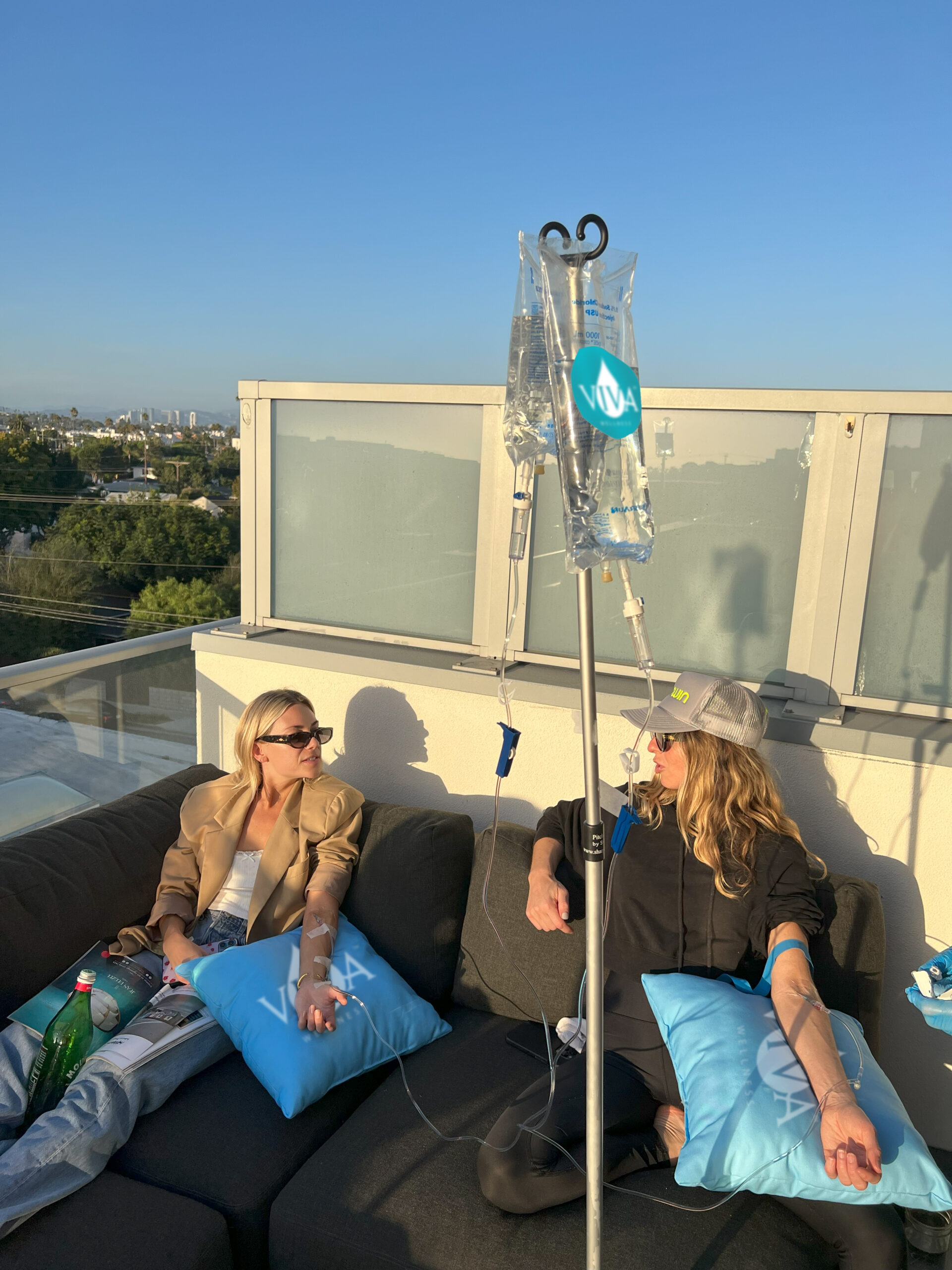
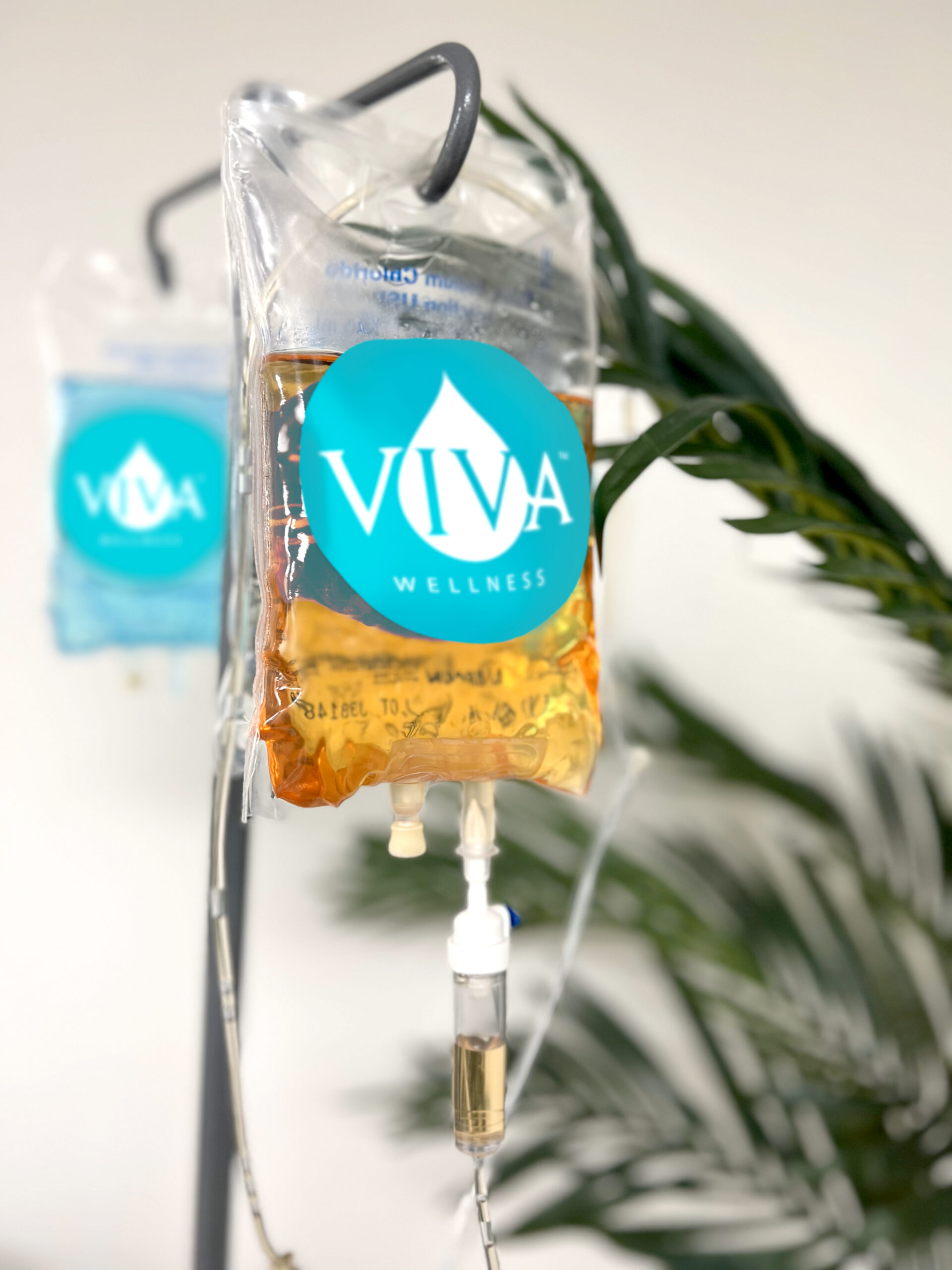
IV therapy bypasses the “obstacle course” entirely. By introducing fluids and vitamins directly into a vein, we achieve three clinical advantages:
1. Instant Systemic Circulation
Because the nutrients go directly into the bloodstream, they are pumped through the heart and distributed to every organ in the body within minutes. There is no “wait time” for digestion or liver processing.
2. Higher Therapeutic Doses
Because we bypass the gut, we can safely administer concentrations of vitamins that would be impossible to take orally. For instance, high-dose Vitamin C used for immune support can reach blood levels $50 to $100 times higher through an IV than is physically possible through the mouth.
3. Cellular Infusion
When the concentration of nutrients in the blood is high, a “concentration gradient” is created. This pressure helps push the vitamins out of the blood and into the cells where they are actually needed for energy production and DNA repair. This is known as intracellular loading, and it is the primary reason people feel an immediate “energy surge” after an IV session.
Comparative Bioavailability Table
| Nutrient | Oral Absorption Rate (Average) | IV Absorption Rate | Why the Difference? |
| Vitamin C | 15% – 35% | 100% | Saturated transporters in the gut. |
| Vitamin B12 | 1% – 2% | 100% | Requires “Intrinsic Factor” in the stomach. |
| Magnesium | 20% – 40% | 100% | High oral doses cause a laxative effect. |
| Glutathione | < 10% | 100% | Rapidly broken down by stomach acid. |
Special Considerations for Edmontonians
In our unique Alberta environment, bioavailability matters even more:
- The Dry Climate: In Edmonton’s arid air, cellular dehydration is chronic. IV therapy provides the most efficient way to restore fluid balance while delivering nutrients.
- Gut Health Challenges: High stress and processed diets (common in the modern “hustle” culture) often lead to “leaky gut” or inflammation, which further reduces oral absorption. IV therapy ensures you get your nutrients regardless of your digestive health.
Frequently Asked Questions (FAQ)
If IV therapy is 100% absorbed, does that mean I don’t need oral vitamins?
Not necessarily. Oral vitamins are excellent for daily maintenance. Think of oral supplements as the “background music” of your health and IV therapy as the “live concert.” IV therapy is used for rapid correction of deficiencies, high-performance recovery, or intensive immune support.
Can you get “too much” of a vitamin via IV?
We primarily use water-soluble vitamins (like B and C). Because they are water-soluble, your body is extremely efficient at filtering out any excess through the kidneys once your cells are saturated. This makes the “supraphysiological” doses in IVs remarkably safe.
Why do I feel the effects of an IV so much faster?
Because of the bypass of the first-pass effect. Within $30 to $60 minutes, your blood plasma reaches peak nutrient concentration. Oral supplements can take $4 to $6 hours just to reach the liver.
Conclusion: Choosing the Most Efficient Path
The science is clear: while oral supplements have their place in a daily routine, they cannot compete with the speed, potency, and 100% bioavailability of intravenous therapy. When your goal is rapid recovery, immune fortification, or a visible “skin glow,” bypassing the digestive tract is the most effective path to success.