A powder day at Sunshine Village or Lake Louise is the reason people move to Banff, but it’s also one of the more physically demanding ways to spend a morning. Between the altitude, the cold, dry mountain air, and hours of sustained muscular effort on the slopes, the body is working harder than most skiers and riders realize until the après-ski beer hits differently than expected.
That’s where IV drip Banff services fit into a serious ski season. Rather than nursing sore legs and a dull headache through the next morning’s first chair, mobile IV therapy Banff delivers medically-directed hydration and recovery care directly to the hotel, condo, or staff housing across the Bow Valley.
Why Powder Days Deplete the Body Faster Than Expected
Banff sits at roughly 1,400 metres above sea level, and the resorts themselves climb considerably higher, which means the body works harder just to maintain baseline oxygen levels before a single run is skied. That extra respiratory effort, combined with cold, dry air that pulls moisture from the body at a faster rate than most skiers account for, creates a hydration deficit that builds steadily across a full day on the mountain.
In our experience working with visitors and seasonal staff across Banff’s ski resorts, the pattern is consistent: people underestimate how much altitude alone increases hydration needs, layering physical exertion and cold exposure on top of a baseline the body is already struggling to maintain. Isotonic IV fluids restore that lost volume at the intracellular level, offering a meaningfully faster recovery path than water and electrolyte tablets alone.
What a Ski Season IV Drip in Banff Includes
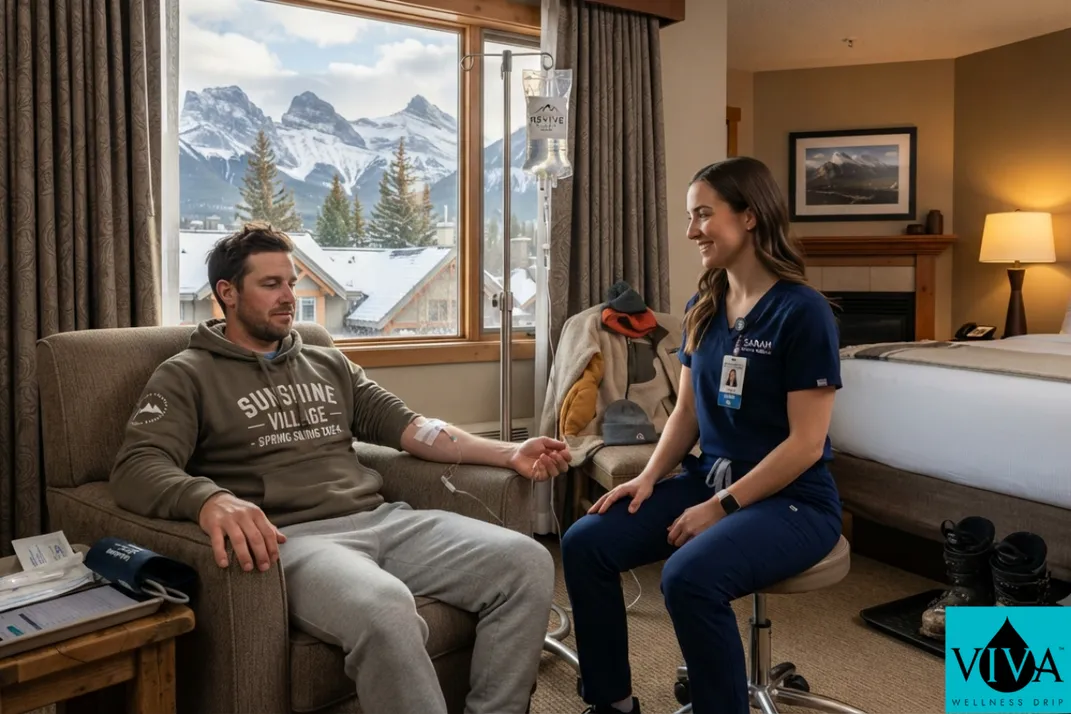
The most requested formulation for Banff’s ski season pairs isotonic saline with magnesium, which helps ease the muscle cramping and tension that come from a full day of skiing or riding. B-complex vitamins and electrolyte replenishment are typically added to counter altitude-related fatigue, while vitamin C supports the immune system through a season of shared gondola cabins and lodge crowds.
Supporting Seasonal Staff Through a Full Winter
Banff and the Bow Valley run on a seasonal workforce, and the physical demands don’t let up after a single powder day the way they do for a visiting skier. Ski instructors, lift operators, and lodge staff are exposed to the same altitude and cold for months at a stretch, which makes a recurring IV therapy routine — often every two to three weeks — a more practical approach than a one-time session after an especially demanding week.
Timing a Session Around the Mountain’s Conditions
The most useful timing for an IV drip Banff session often follows the mountain’s own rhythm. A session scheduled the evening after a big powder day addresses the day’s fluid and electrolyte loss before it compounds into next-morning stiffness. For visitors managing a short ski trip, a session on arrival can help offset the combination of travel fatigue and the immediate jump in altitude.
Choosing the Best Mobile IV Drip in Banff
According to research published through the National Institutes of Health, intravenous rehydration corrects fluid and electrolyte deficits significantly faster than oral rehydration methods, which matters when there’s another day on the slopes planned for tomorrow. Every session should begin with a proper health screening, regardless of how routine a post-ski drip might feel to a regular visitor.
The team at Viva Wellness Drip brings this standard of care directly to the Bow Valley corridor, from Banff townsite through to Lake Louise, without requiring anyone to leave the mountain environment to access it. A registered nurse or paramedic administers every session. Explore the full menu of IV drip services to find the ski-season formulation that matches how your body has handled the mountain this week.
The Bow Valley rewards physical ambition, but that ambition needs real recovery behind it. Mobile IV therapy is one of the more practical ways to keep pace with a season built around chasing the next powder day.
For anyone weighing whether it’s worth the booking, the real comparison isn’t a session versus doing nothing — it’s a session versus losing a full day of a short ski trip to stiffness and fatigue. In a destination where lift tickets and travel time are both expensive, that trade-off tends to favor staying ahead of the deficit rather than reacting to it after the fact.
Frequently Asked Questions
How does altitude in Banff affect hydration needs during ski season?
Banff’s elevation increases respiratory rate and fluid loss compared to sea level, meaning skiers and riders typically need more hydration support than they would at a lower-altitude resort.
When is the best time to book an IV drip after a day of skiing?
Many clients schedule sessions in the evening after skiing, allowing the body to begin recovery overnight before the next day on the mountain.
Can Viva Wellness Drip travel to accommodations near Lake Louise?
Yes. The team serves the full Bow Valley corridor, including Banff townsite, Canmore, and Lake Louise.
Is IV therapy helpful for altitude-related headaches?
Yes. Isotonic fluids and electrolyte replenishment can help address the dehydration that often contributes to altitude-related headaches during a ski trip.
Do seasonal ski resort staff book recurring IV therapy sessions?
Yes. Many ski instructors and resort staff schedule sessions every two to three weeks throughout the season as ongoing support rather than a one-time fix.