Along the rugged eastern coast of Long Island, Bahamas, the Atlantic Ocean opens into an extraordinary natural formation that has captivated scientists, freedivers, and travelers alike. Dean’s Blue Hole, the deepest known blue hole in the world, drops abruptly from shallow turquoise water into a dark, near-vertical abyss. What appears calm at the surface conceals one of the planet’s most dramatic underwater landscapes.
This article explores the geological origins, cultural significance, and modern relevance of Dean’s Blue Hole Bahamas, examining why it stands among the world’s most renowned dive sites—and how it fits within a broader wellness-focused understanding of adventure, presence, and respect for natural forces.
Key Takeaways
- Dean’s Blue Hole is the deepest known blue hole in the world
- It is located on Long Island, Bahamas, along the Atlantic coast
- The site is central to global freediving and marine geology research
- Blue holes provide insight into ancient sea levels and karst formations
- Visiting responsibly supports sustainable adventure tourism in the Bahamas
Long Island, Bahamas: A Landscape Shaped by the Sea
Unlike more developed Bahamian islands, Long Island remains largely untouched, defined by cliffs, beaches, and open ocean. Stretching nearly 80 miles in length but only a few miles wide, the island’s geography creates a dramatic contrast between calm Caribbean waters to the west and the powerful Atlantic Ocean to the east.
It is on this Atlantic side that Dean’s Blue Hole reveals itself—an abrupt geological anomaly embedded within an otherwise shallow coastal shelf.
What Is Dean’s Blue Hole?
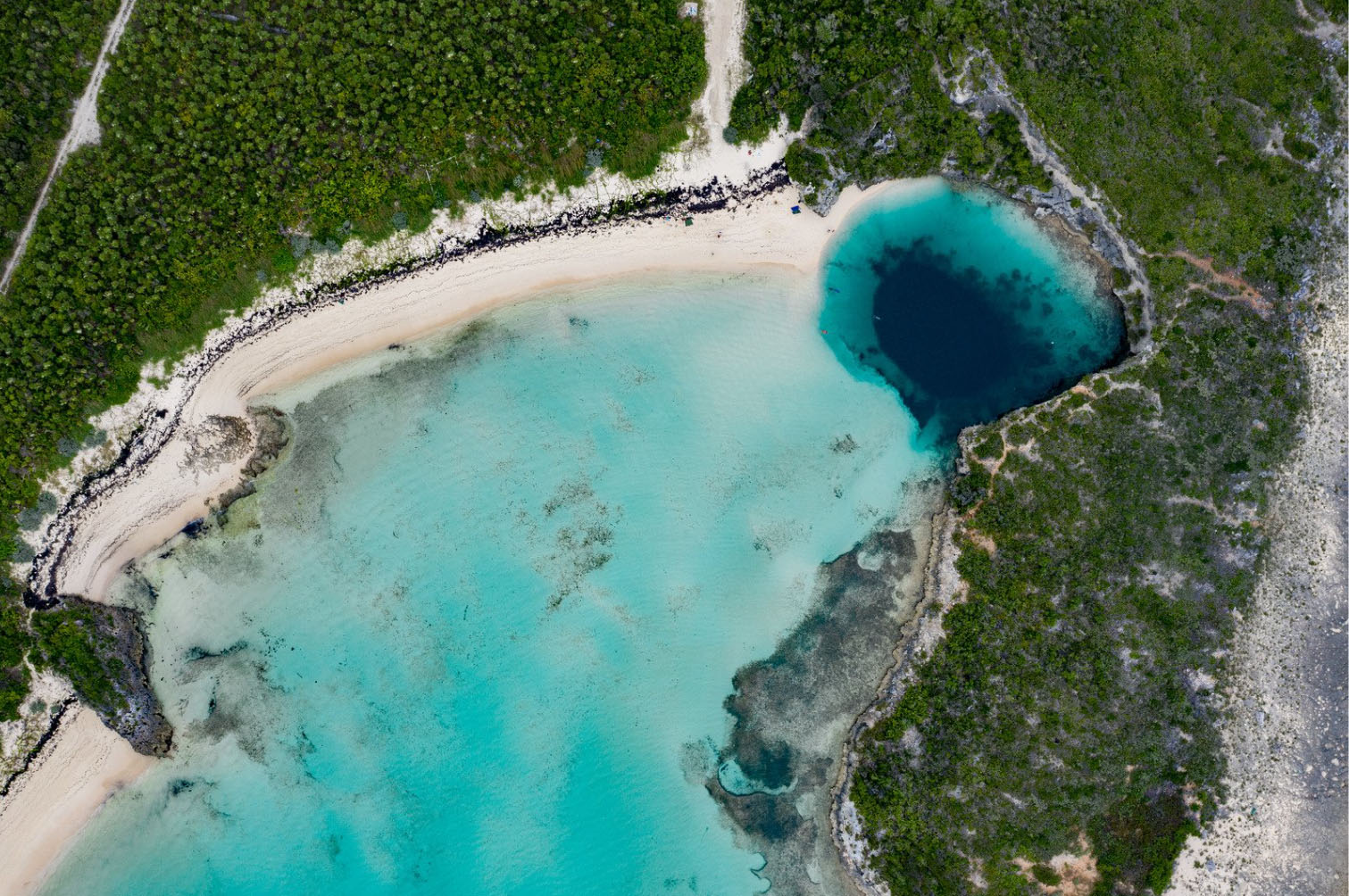
Dean’s Blue Hole is a massive underwater sinkhole measuring approximately 202 meters (663 feet) deep. The hole begins just meters from shore, making it unusually accessible compared to other deep-sea formations.
At the surface, the water appears calm and shallow. Suddenly, the seabed drops away into a near-perfect vertical shaft, forming a deep, dark void that absorbs light as depth increases.
This combination of accessibility and depth makes it unique among Atlantic underwater formations.
Deep Sea Sinkholes and Marine Geology
Blue holes are a type of deep-sea sinkhole formed through geological processes involving limestone erosion. During past ice ages, sea levels were significantly lower, exposing limestone platforms to rainwater, which dissolved rock over thousands of years.
When sea levels rose again, these cavities flooded, forming blue holes.
Dean’s Blue Hole offers scientists valuable insight into:
- Past climate conditions
- Ancient sea levels
- Subsurface cave systems
As such, it plays an important role in marine geology in the Bahamas and broader climate research.
Why Is the Water So Blue?
The intense blue color that gives blue holes their name results from light absorption. Shallow waters reflect sunlight back, appearing turquoise. In deep water, light is absorbed, especially red wavelengths, leaving deep blue tones.
At Dean’s Blue Hole, the contrast between shallow reef flats and extreme depth creates a visible circular boundary—making it striking even from above.
Freediving Destinations: Why Dean’s Blue Hole Is Iconic
Among freediving destinations, Dean’s Blue Hole holds legendary status. It regularly hosts international freediving competitions, including the Vertical Blue event, where athletes attempt record-breaking descents on a single breath.
Its popularity stems from:
- Exceptional depth close to shore
- Minimal currents in calm conditions
- Clear visibility
However, the site demands respect. Depth, pressure, and psychological intensity require advanced training and safety protocols.
Blue Hole Diving vs. Freediving
While Dean’s Blue Hole is famous for freediving, blue hole diving (using scuba) is less common here due to depth limitations and safety considerations. Most scuba divers explore the shallow perimeter rather than the abyss itself.
Freediving emphasizes breath control, relaxation, and mental focus—qualities increasingly associated with wellness and mindfulness practices.
Adventure Tourism Bahamas: Risk and Responsibility
Adventure tourism in the Bahamas has grown as travelers seek immersive natural experiences. Dean’s Blue Hole attracts those interested in geology, photography, and personal challenge.
Responsible visitation includes:
- Respecting depth limits
- Avoiding solo dives
- Observing weather and sea conditions
This approach aligns with sustainable adventure tourism, where experience does not come at the expense of safety or environmental integrity.
Marine Life Around Dean’s Blue Hole
Although the interior of the blue hole itself is relatively barren due to limited light and oxygen, the surrounding reefs support diverse marine life.
Visitors may observe:
- Reef fish and rays
- Coral formations
- Occasional pelagic species
These ecosystems highlight the broader Bahamas natural wonders that extend beyond the blue hole itself.
World-Famous Dive Sites and Global Recognition
Dean’s Blue Hole consistently appears on lists of world-famous dive sites, not because of ease, but because of its singular nature. It represents an intersection of:
- Extreme depth
- Geological rarity
- Human curiosity
Unlike recreational dive destinations, its appeal lies in observation and respect rather than conquest.
Long Island Bahamas Attractions Beyond the Blue Hole
While Dean’s Blue Hole is the island’s most famous site, Long Island Bahamas attractions include:
- Quiet beaches
- Hiking trails along cliffs
- Local fishing communities
This slower pace supports reflective travel, allowing visitors to balance high-impact experiences with rest and recovery.
Wellness and the Psychology of Depth
Descending into a blue hole—whether physically or visually—triggers strong psychological responses. Depth challenges perception, fear, and control.
Freedivers often describe the experience as meditative, requiring:
- Controlled breathing
- Mental stillness
- Heightened body awareness
These qualities align with wellness practices focused on mindfulness and nervous system regulation.
Environmental Protection and Conservation
While Dean’s Blue Hole is naturally resilient due to its depth, surrounding ecosystems remain vulnerable. Litter, anchoring, and uncontrolled visitation pose risks.
Preservation efforts emphasize:
- Education over exploitation
- Minimal infrastructure
- Community involvement
Protecting blue holes ensures they remain valuable for both science and cultural heritage.
Why Dean’s Blue Hole Matters Globally
Dean’s Blue Hole is not just a local attraction—it is a global reference point for:
- Marine geology research
- Human physiological limits
- Climate history
Its existence reminds us that Earth’s most powerful features often lie beneath the surface, requiring humility and patience to understand.
Conclusion
On Long Island, Bahamas, Dean’s Blue Hole stands as a profound natural phenomenon—an intersection of geology, oceanography, and human curiosity. Descending into its depths, whether through scientific study or mindful observation, reveals more than physical space; it reveals the importance of balance between exploration and restraint. As one of the world’s most iconic underwater formations, Dean’s Blue Hole invites not conquest, but respect—offering a powerful lesson in how adventure, wellness, and environmental awareness can coexist.
FAQs
1. Where is Dean’s Blue Hole located?
It is located on the Atlantic coast of Long Island, Bahamas.
2. How deep is Dean’s Blue Hole?
It is approximately 202 meters (663 feet) deep, making it the deepest known blue hole.
3. Can beginners dive at Dean’s Blue Hole?
Surface observation and shallow snorkeling are accessible, but deep diving requires advanced training.
4. Why is Dean’s Blue Hole famous?
Its depth, accessibility, and role in freediving and geological research make it world-renowned.
5. Is Dean’s Blue Hole protected?
While not heavily developed, conservation relies on responsible tourism and local stewardship.