In the early hours of winter mornings, long before sunrise, the streets of Nassau, Bahamas come alive with the thunder of drums, the shimmer of elaborate costumes, and the collective energy of thousands moving in rhythm. This is Junkanoo—a cultural parade that blends music, dance, craftsmanship, and competition into one of the Caribbean’s most powerful public celebrations.
More than a festival, Junkanoo Festival Nassau represents Bahamian history, resilience, and identity expressed through motion and sound. This article explores the origins, artistry, and competitive structure of Junkanoo, revealing how it functions as both a cultural tradition and a form of collective wellness through movement, expression, and community.
Key Takeaways
- Junkanoo is the most significant street festival in Nassau, Bahamas
- The parade features handmade costumes, drum-driven music, and intense competition
- Junkanoo reflects Bahamian history, identity, and community organization
- The festival blends celebration with months of preparation and artistic labor
- Participation and movement play a role in emotional release and cultural wellness
Nassau, Bahamas: The Cultural Heart of Junkanoo
As the capital of The Bahamas, Nassau has long been a center of trade, governance, and cultural exchange. While the city is known globally for beaches and tourism, Junkanoo represents its deepest cultural expression.
Unlike staged performances, Junkanoo unfolds directly in the streets, transforming Nassau into a living performance space. Neighborhood groups, families, and cultural organizations work year-round to prepare for a parade that lasts only a few hours—but carries centuries of meaning.
What Is Junkanoo?
Junkanoo is a traditional Bahamian street parade held primarily on Boxing Day (December 26) and New Year’s Day. It features organized groups competing across categories such as music, costumes, and overall performance.
The parade combines:
- Percussion-heavy music
- Choreographed dance
- Large-scale, handmade costumes
Together, these elements create one of the most dynamic Caribbean music festivals, rooted in African diasporic traditions and colonial history.
Historical Roots of Junkanoo
Junkanoo traces its origins to the era of enslavement in The Bahamas. Enslaved Africans were granted brief periods of freedom during Christmas, when they celebrated through music, dance, and masking traditions carried from West Africa.
Over time, these informal gatherings evolved into organized parades. Junkanoo became both a form of resistance and cultural preservation—allowing expression, satire, and identity within restrictive systems.
Today, Junkanoo stands as a central Bahamian heritage event, symbolizing survival, creativity, and communal pride.
Junkanoo Costumes: Art Built by Hand
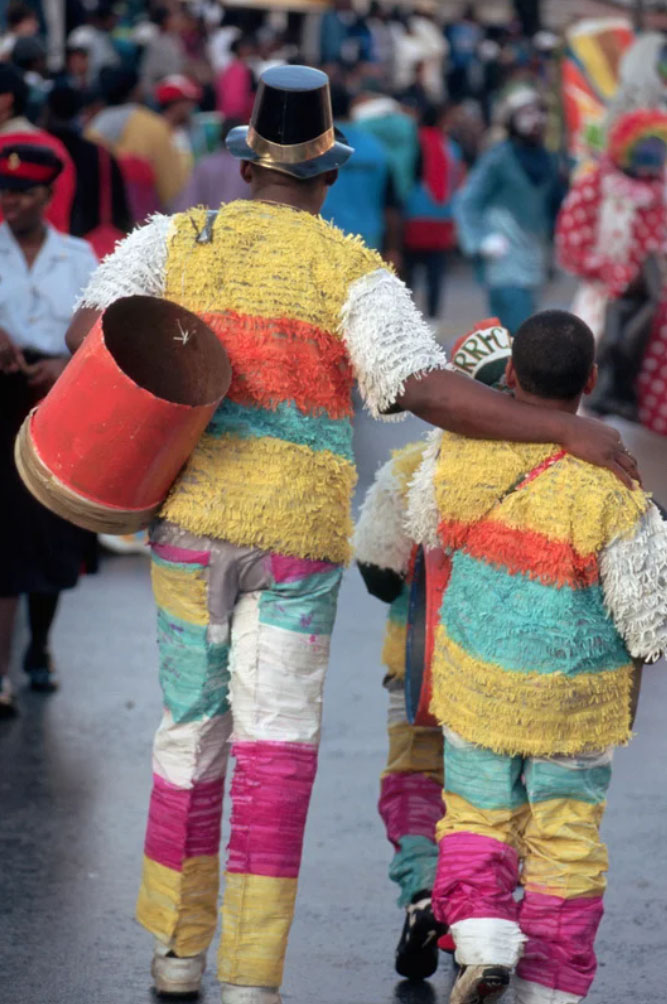
One of the most visually striking elements of Junkanoo is its costumes. Unlike mass-produced festival attire, Junkanoo costumes are entirely handmade, often constructed from cardboard, crepe paper, wire, and paint.
Costume creation involves:
- Months of design and assembly
- Nightly work sessions called “shack time”
- Collaboration across generations
Themes often reference Bahamian history, folklore, politics, and global events, blending satire with spectacle.
Satire, Symbolism, and Storytelling
Much like political cartoons, Junkanoo costumes communicate layered messages. Exaggerated faces, bold colors, and symbolic imagery allow groups to comment on:
- Social issues
- Political leadership
- Cultural pride
This makes Junkanoo not just a parade, but a mobile narrative—where art and critique coexist.
Drum and Dance Parades: The Sound of Junkanoo
At the core of Junkanoo is rhythm. Drum and dance parades rely on instruments such as:
- Goatskin drums
- Cowbells
- Whistles
- Brass horns
The music is fast, loud, and relentless—designed to energize performers and spectators alike. Dancers move continuously, matching rhythm with footwork and body movement that demands stamina and coordination.
This physical intensity transforms Junkanoo into an embodied experience rather than passive entertainment.
The Competitive Spirit of Junkanoo
Junkanoo is fiercely competitive. Groups are judged on:
- Music
- Costume design
- Dance execution
- Overall presentation
Competition drives innovation and discipline. Groups rehearse extensively, refining choreography and musical timing. Winning brings prestige, but participation itself reinforces community bonds.
This competitive structure distinguishes Junkanoo from casual street festivals in Nassau, elevating it to a nationally significant cultural event.
Christmas Festivals Bahamas: Timing and Meaning
Junkanoo’s placement within the holiday season is significant. As one of the most prominent Christmas festivals in The Bahamas, it blends celebration with remembrance—honoring ancestors while welcoming the new year.
The early-morning schedule reflects tradition, with parades often beginning before dawn, emphasizing dedication and endurance.
Bahamian Cultural Celebrations and Identity
Junkanoo plays a crucial role in shaping Bahamian cultural identity. Participation connects individuals to history, community, and shared values.
For many Bahamians, Junkanoo is not optional entertainment—it is a responsibility and a legacy passed down through families and neighborhoods.
Movement, Music, and Wellness
From a wellness perspective, Junkanoo illustrates how movement and rhythm support emotional release and social connection. Drumming, dancing, and collective participation stimulate both physical exertion and mental engagement.
Such experiences align with wellness principles emphasizing:
- Community belonging
- Expressive movement
- Stress release through rhythm
Cultural Tourism and Responsible Observation
As Junkanoo attracts international attention, cultural tourism in Nassau continues to grow. Responsible observation means recognizing Junkanoo as a living tradition rather than a spectacle designed solely for visitors.
Understanding its history and significance allows travelers to engage respectfully observing, learning, and appreciating without overshadowing local meaning.
Street Festivals Nassau vs. Junkanoo
While Nassau hosts various celebrations, Junkanoo stands apart due to:
- Its historical depth
- Structured competition
- National cultural importance
This distinction reinforces its role as the Bahamas’ most significant cultural event.
Why Junkanoo Endures
Junkanoo endures because it evolves. While rooted in tradition, groups incorporate modern themes, music influences, and artistic techniques—ensuring relevance across generations.
This balance between continuity and innovation keeps the festival alive and meaningful.
Conclusion
In Nassau, Bahamas, Junkanoo is more than a parade—it is a rhythmic expression of history, artistry, and collective identity. Through handcrafted costumes, powerful drumlines, and intense competition, the festival transforms city streets into a stage for cultural storytelling and emotional release. As one of the Caribbean’s most dynamic Bahamian cultural celebrations, Junkanoo demonstrates how movement, music, and community can foster resilience and wellness. Experienced with understanding and respect, it offers insight into the enduring power of tradition expressed through rhythm.
FAQs
1. What is Junkanoo in Nassau?
Junkanoo is a traditional Bahamian street parade featuring music, dance, costumes, and competition.
2. When does Junkanoo take place?
It is held annually on Boxing Day (December 26) and New Year’s Day.
3. Why are Junkanoo costumes important?
They are handmade works of art that express cultural themes, satire, and storytelling.
4. Is Junkanoo a competition?
Yes, organized groups compete across music, costume, and performance categories.
5. Can visitors attend Junkanoo?
Yes, visitors can observe the parade, but it is primarily a cultural event for Bahamians.