Vancouver’s outdoor scene doesn’t pause for weather, and neither do the people who live for it. The Grouse Grind sees repeat climbers year-round, the North Shore’s mountain bike trails draw riders through rain and shine, and Stanley Park’s seawall stays packed with runners regardless of season. It’s one of the reasons people move here — but it’s also a level of physical output that most weekend athletes underestimate the toll of.
That’s where IV drip Vancouver services fit into a serious training or adventure schedule. Rather than treating a Sunday-night crash as inevitable, mobile IV therapy Vancouver delivers medically-directed recovery care directly to the home, so the body actually catches up before the next outing.
Why Vancouver’s Terrain Is Harder on the Body Than It Looks
The Grind alone climbs nearly 3,000 feet over less than three kilometers, and most hikers finish it dehydrated and depleted well before they realize it, since the shaded forest canopy masks how much they’re sweating. North Shore mountain biking adds a different kind of demand: sustained grip strength, core engagement, and the adrenaline-driven dehydration that comes with technical terrain.
In our experience working with Vancouver’s outdoor community, the pattern holds across all three activities — hikers, bikers, and runners consistently underestimate fluid loss because the coastal climate rarely feels as hot as it actually is. Isotonic IV fluids restore that lost volume at the intracellular level, offering a faster recovery path than rehydrating with water and a protein shake alone.
What a Trail Recovery IV Drip in Vancouver Includes
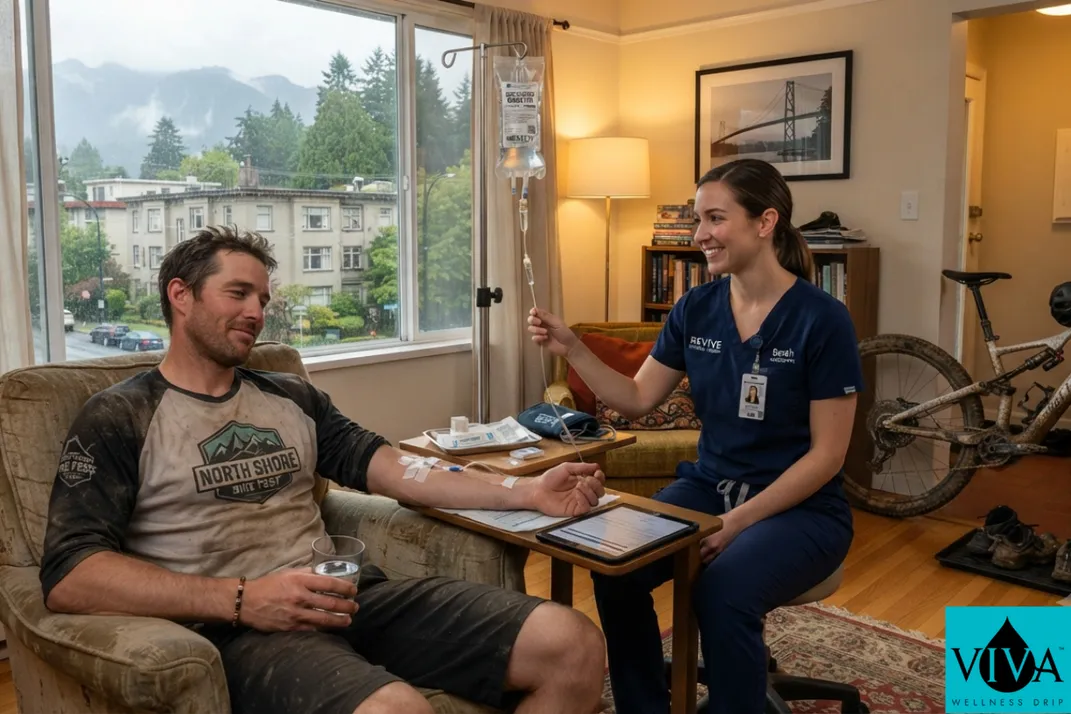
The most requested formulation for Vancouver’s outdoor athletes pairs isotonic saline with magnesium, which helps ease the muscle cramping and tension that come from sustained climbs or technical descents. Amino acids and B-complex vitamins are commonly added to support muscle repair and reduce recovery time between back-to-back training days.
Built for a Weekend Warrior’s Schedule
A typical IV therapy Vancouver session runs 45 to 60 minutes, which fits comfortably into a Sunday evening after a full day on the North Shore or a Saturday morning before a second hike. Because the team at Viva Wellness Drip travels directly to the client’s home, there’s no need to navigate Vancouver traffic on already-tired legs to reach a clinic.
Supporting Consistent Training Through Vancouver’s Wet Season
Vancouver’s outdoor community doesn’t take a full off-season, and the North Shore trail network stays busy through the rainier months as much as the summer ones. Cold, wet conditions add a different kind of physiological stress on top of exertion, since the body works harder to regulate temperature while still managing the same fluid losses from physical output.
For athletes training consistently through the fall and winter, a recurring IV therapy schedule — often every two to three weeks — helps maintain a stable recovery baseline rather than letting fatigue accumulate across a demanding training block. This proactive approach tends to matter more for serious trail athletes than any single post-hike session.
Choosing the Best Mobile IV Drip in Vancouver
Recovery-focused IV therapy should follow the same clinical standards as any other medical service, regardless of how routine a post-hike drip might feel. According to research published through the National Institutes of Health, intravenous rehydration corrects fluid and electrolyte deficits significantly faster than oral rehydration methods, which matters when there’s another trail day on the calendar in 48 hours.
The team at Viva Wellness Drip administers every session through registered nurses, with formulations reviewed by a supervising physician before reaching the client. Explore the full menu of IV drip services to find the recovery blend that matches your training load, whether that’s a single Grind repeat or a full weekend of North Shore riding.
Vancouver is gorgeous specifically because it rewards this kind of outdoor commitment, but recovery is the part most trail athletes shortchange. Mobile IV therapy is one of the more practical ways to keep pace with a terrain that doesn’t slow down for anyone.
Training volume tends to get all the attention, while recovery quietly determines whether that volume is sustainable. Treating IV therapy as part of the training plan itself, rather than an occasional treat after a hard session, is what separates athletes who stay consistent through a full season from those who burn out by spring.
Frequently Asked Questions
How soon after a hike or ride should I book an IV drip in Vancouver?
Most clients schedule within a few hours of finishing their activity, once they’re back home, so the rehydration protocol addresses the deficit before fatigue fully sets in overnight.
Is IV therapy helpful for muscle soreness after mountain biking?
Yes. Magnesium and amino acids included in most recovery formulations help ease muscle tension and support repair, which can reduce next-day soreness after technical riding.
Can Viva Wellness Drip travel to North Shore neighborhoods like North Vancouver?
Yes. The team serves the greater Vancouver area, including North Vancouver and West Vancouver, for clients returning from North Shore trails.
How is IV therapy different from a post-workout protein shake?
A protein shake supports muscle repair through digestion, while IV therapy delivers fluids, electrolytes, and nutrients directly into the bloodstream for immediate, complete absorption.
Should I get an IV drip before or after a big hike?
Both are common. A pre-hike session can help ensure you start well-hydrated, while a post-hike session addresses the fluid and electrolyte loss from the activity itself.