Planning an itinerary around the world’s most iconic cycling race requires meticulous strategy, an understanding of geographical logistics, and a proactive approach to personal well-being. The July 2026 edition promises extraordinary drama, kicking off with an international Grand Départ in Barcelona, Spain, before carving through the Pyrenees, the Alps, and concluding on the historic cobblestones of Paris.
Whether you are coordinating an incentive travel group, managing corporate hospitality, or planning an elite personal vacation, finding the absolute best place to watch the Tour de France is about balancing race positioning with absolute physical comfort. Standing roadside for hours in the European midsummer heat takes a toll on the body. As corporate wellness and high-intent event services experts, we have seen firsthand how easily dehydration and heat exhaustion can disrupt a premier travel experience.
1. Master the 2026 Route: High-Intent Spectator Locations
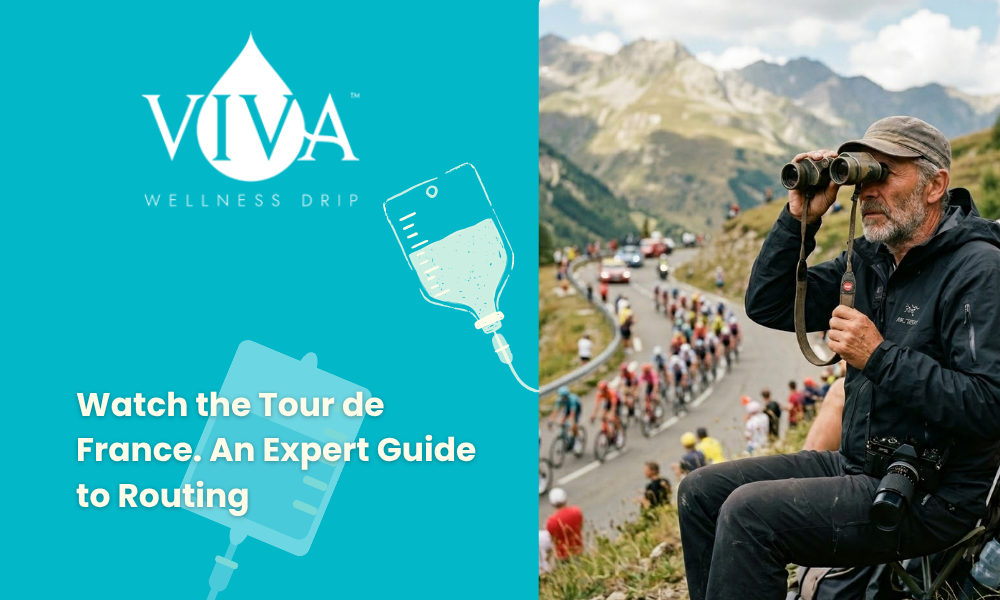
To lock in your viewing strategy, you must understand the rhythm of the race routing. The 2026 itinerary features 21 grueling stages, offering distinct viewing environments ranging from fast-paced urban circuits to thin-air mountain passes.
The Urban Spectacle: Grand Départ Barcelona
For those who want vibrant culture paired with world-class athletics, the opening stages in Catalonia provide unparalleled access. Stage 1 features an intense, high-speed Team Time Trial directly through the heart of Barcelona, concluding on the iconic Montjuïc hill. The city offers superb infrastructure, making it an excellent baseline for corporate travel groups who want to experience the race without losing premium amenities.
The Historic Climax: Alpe d’Huez
If your goal is to experience the legendary, chaotic soul of mountain cycling, the Alps are your destination. In 2026, the race features a rare back-to-back showcase at Alpe d’Huez (Stages 19 and 20). Positioned along the infamous 21 hairpin turns, you will witness the world’s elite riders battling extreme gradients. However, accessing these alpine sectors requires entering the mountain passes up to 24 to 48 hours before the peloton arrives due to strict road closures.
2. Managing Spectator Logistics and Wellness Roadside
Securing an optimal viewing spot is only half the battle; managing your physical health during long days on the course is what ensures a successful experience. For authoritative race tracking, schedules, and official caravan timing, spectators should regularly check the Official Tour de France Website to adapt to real-time road closures.
When you stand on a mountain pass like the Col du Galibier or wait along a flat sprint sector in Bordeaux, you are fully exposed to ambient temperatures that frequently exceed 90°F (32°C). Dehydration compromises cellular function, saps energy, and causes severe jet lag or exhaustion to set in rapidly.
To maintain peak physical performance during your travels, advanced recovery protocols are highly recommended. Integrating targeted wellness solutions, such as the customized hydration therapies available at Viva Wellness Drip, can radically alter your recovery trajectory. Replenishing core micronutrients and fluids intravenously bypasses the digestive tract, offering instant bio-availability to combat travel fatigue and heat stress.
3. The Spectator Safety and Crowd Management Protocol
Firsthand experience managing high-visibility corporate events has taught our team that safety is the cornerstone of any premium event activation. The sheer scale of the crowds can create logistical bottlenecks that threaten your comfort if not managed professionally.
Roadside Safety Standards
The Amaury Sport Organisation (ASO) works closely with local law enforcement to enforce strict safety boundaries. Spectators must remain behind the white lines and barriers at all times. The riders utilize every inch of the asphalt, frequently cutting tight corners near the gravel shoulders at speeds exceeding 40 mph (64 km/h).
Mitigating Environmental Health Risks
According to guidelines from the World Health Organization regarding mass gatherings, heat-related illnesses and deep vein thrombosis (DVT) from prolonged standing are the primary health risks at major summer sporting events.
- Shade Mitigation: Mountain stages offer virtually zero natural shade. Bring lightweight UV-blocking umbrellas and cooling towels.
- Active Circulation: Shift your weight frequently while waiting for the caravan to pass to maintain optimal vascular circulation in your lower limbs.
- Mobile Medical Infrastructure: Know where the nearest local Croix-Rouge (Red Cross) tent is positioned relative to your milestone marker.
For premium travel coordinators looking to safeguard their guests, deploying a dedicated mobile health support plan is standard best practice. Utilizing professional mobile event wellness services ensures your guests have access to private, on-demand hydration setups at their luxury villas or hotels immediately following a exhausting day on the race course.
4. Securing Luxury Travel Accommodations and Group Bookings
Because of the immense global popularity of the event, local accommodation availability near major mountain summits and finish lines drops significantly up to a year in advance.
The Booking Process
When organizing your trip, prioritize base cities that offer logistical flexibility. For the Alpine stages, booking luxury accommodations in Chambéry or Grenoble allows your group to travel against the heaviest traffic flows. Ensure your transport assets possess the correct ASO vehicle passes to access restricted premium hospitality zones.
Seamless Wellness Integration
To maximize the value of your itinerary, consider scheduling custom mobile health sessions directly into your booking timeline. Coordinating an on-site recovery session on a rest day allows your group to bounce back from intense travel schedules, ensuring everyone remains energized for the final stages.
Conclusion: Engineering the Ultimate Race Experience
Finding the absolute best place to watch the Tour de France comes down to deliberate routing choices, rigorous preparation, and an unyielding focus on safety and physical health. From the urban energy of the Grand Départ in Barcelona to the lung-burning heights of Alpe d’Huez, your focus must remain on premium execution. By prioritizing elite hydration strategies and professional crowd safety protocols, you convert a logistically challenging mass event into an exclusive, revitalizing luxury experience.
FAQs
How can I arrange on-site wellness services for a private corporate travel group during the race?
You can streamline the booking process by contacting specialized mobile providers well ahead of the event dates. Our team coordinates on-demand scheduling to bring dedicated hydration and recovery setups directly to your private villa, luxury hotel, or corporate hospitality venue, aligning seamlessly with your daily race itinerary.
What are the primary logistical benefits of choosing a city finish over a mountain summit?
City finishes, such as the historic final stage in Paris or the urban stages in Barcelona, offer robust public transit, direct access to premium dining, and structured viewing areas. This provides a more predictable environment for large groups compared to mountain summits, which require long hikes, early arrival windows, and exposure to unpredictable alpine weather.
How do local road closures affect mobile service availability on race days?
Local authorities typically close event routes to all vehicular traffic several hours before the publicity caravan and the peloton arrive. To ensure reliable availability, our mobile teams monitor regional traffic updates and plan alternative routing, allowing us to deliver premium services at your accommodation before or immediately following the daily stage restrictions.
What steps are involved in the booking process for customized group wellness packages?
The process begins with a comprehensive consultation to assess your group’s size, travel itinerary, and specific health goals. From there, we design a tailored service schedule, ensuring our medical professionals are deployed to your specific geographic locations exactly when your guests require recovery support.
Why is maintaining proper hydration so critical when watching the mountain stages?
Mountain stages feature long wait times at high altitudes with minimal shade and high UV exposure. The combination of elevation and summer heat accelerates fluid loss through respiration and perspiration, making advanced rehydration methods essential to prevent altitude sickness, headaches, and physical exhaustion.