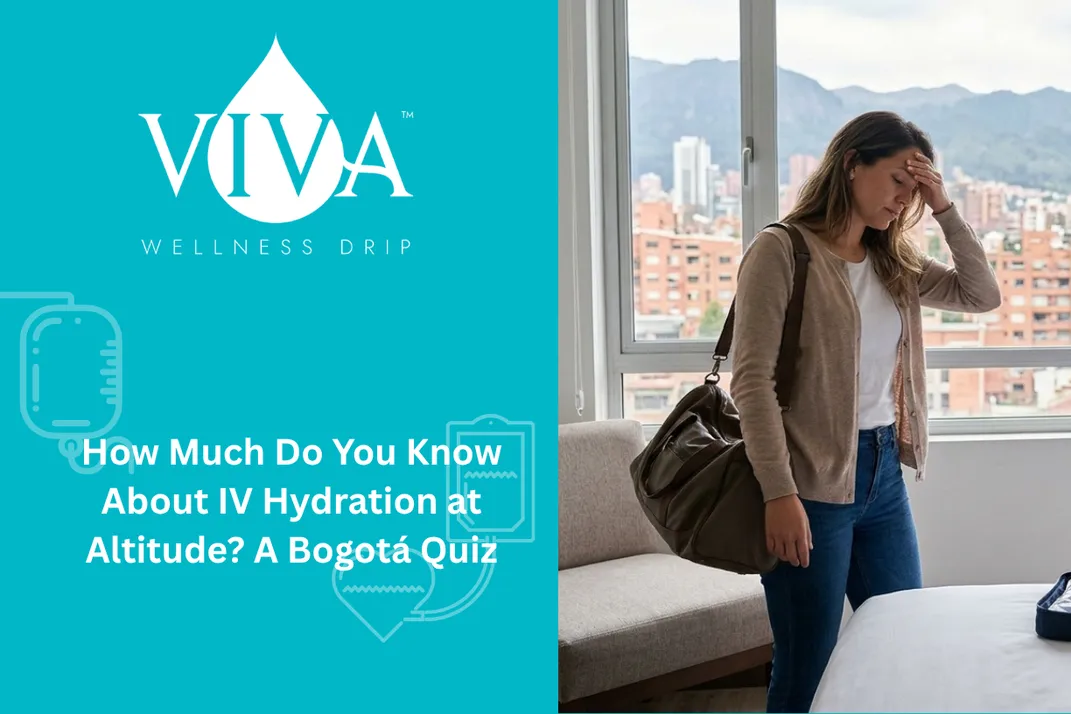
Quick answer: Bogotá sits at about 2,600 meters, where thinner air and dry conditions can affect how you feel. IV hydration may support fluid balance, but it does not cure altitude sickness or replace rest, water, and medical advice. Test your knowledge with the eight true-or-false statements below.
Bogotá is one of the highest major capitals in the world. Visitors often notice shortness of breath, headaches, poor sleep, or fatigue in the first days, and some wonder whether mobile IV therapy can help. Try the quiz, then check the answers.
The Quiz
Statement 1: Altitude can make you lose more fluid through breathing.
True. At higher altitude the air is drier and breathing rate tends to increase, so the body loses more water through the lungs. Staying ahead on fluids is a common recommendation.
Statement 2: IV hydration cures altitude sickness.
False. The Mayo Clinic explains that altitude sickness is caused by reduced oxygen at height, and that the main solution is giving the body time to adjust or descending if symptoms are significant. Fluids alone do not fix low oxygen.
Statement 3: At 2,600 meters, severe altitude sickness is very common.
False. Mild symptoms such as headache or fatigue can occur at this height, especially for people arriving from sea level, but severe forms are far more typical at much greater elevations. Still, take any worsening symptoms seriously.
Statement 4: Drinking water is often enough for mild dehydration.
True. Oral fluids and electrolytes handle most mild cases. IV delivery is an option when someone cannot drink enough or prefers it.
Statement 5: A screening should happen before any IV.
True. A responsible provider asks about your medical history, medications, allergies, and symptoms first. This is central to the consultation-first model at Viva Wellness Drip, and you can browse the options on our services page.
Statement 6: All IV formulas contain the same ingredients.
False. Many are built on saline or electrolytes with added vitamins or minerals, but the contents and doses differ. Always ask what is in the bag and why.
Statement 7: Alcohol feels the same at altitude as at sea level.
Often false. Many visitors report feeling the effects sooner or more intensely in their first days at altitude, combined with dehydration and poor sleep. Go easy while you adjust.
Statement 8: Severe symptoms should be handled by a wellness appointment.
False. Severe headache, confusion, trouble breathing, chest pain, or persistent vomiting need prompt medical attention. The NHS guidance on altitude sickness is clear that serious symptoms require urgent action.
Your Score
- 7 to 8 correct: You have a realistic view of what IV hydration can and cannot do.
- 4 to 6 correct: A good start. Review the points above before booking anything.
- 0 to 3 correct: No problem. Talk with a qualified provider or your own doctor before deciding.
Practical Tips for Your First Days in Bogotá
- Pace yourself. Keep activity light for the first day or two.
- Drink regularly, and sip water throughout the day.
- Limit alcohol while your body adjusts.
- Sleep and eat well, and avoid heavy meals late at night.
- Know your limits, and see a doctor if symptoms worsen.
Where Mobile IV Therapy Fits
Mobile IV therapy brings a licensed clinician to your hotel, apartment, or home. It may suit travelers who feel run down after a long flight, or residents who want a convenient session. It is a supportive option, not a treatment for altitude illness.
Viva Wellness Drip operates an established service in Edmonton. Entrepreneurs who want to explore taking a consultation-led model to a new market can read about our franchise opportunities.
Frequently Asked Questions
How high is Bogotá, and does it affect hydration?
Bogotá is about 2,600 meters above sea level. Drier air and faster breathing can increase fluid loss, so regular drinking is wise.
Can IV therapy prevent altitude sickness?
There is no evidence that IV hydration prevents it. Gradual acclimatization and avoiding overexertion are the standard advice.
Is mobile IV therapy safe for visitors?
For suitable candidates, with qualified clinicians and sterile supplies, it is generally considered safe. Disclose your health history and any medications.
How long does a mobile IV session last?
About 30 to 60 minutes, plus screening and setup.
When should I see a doctor instead?
If you have severe headache, confusion, breathlessness at rest, chest pain, or vomiting that will not stop. Read more about our approach on the Viva Wellness Drip website.