Brussels clients tend to want the procedure explained before they want the benefits explained, which I find refreshing. It is a city of people who read the documentation.
So here is the documentation. Seven stages of a mobile IV hydration session, described the way it actually unfolds in an apartment in Ixelles or a hotel room near Schuman, with nothing skipped.
1. The Booking and Pre-Screening
Before anyone arrives
A proper provider collects your history before dispatching a nurse — renal and cardiac conditions, current medications, allergies, pregnancy status, and previous reactions to infusion. In Belgium, as across the EU, infusion therapy operates under medical direction, and this pre-screening is where that oversight begins.
2. Arrival and Setup
Ten minutes, mostly conversation
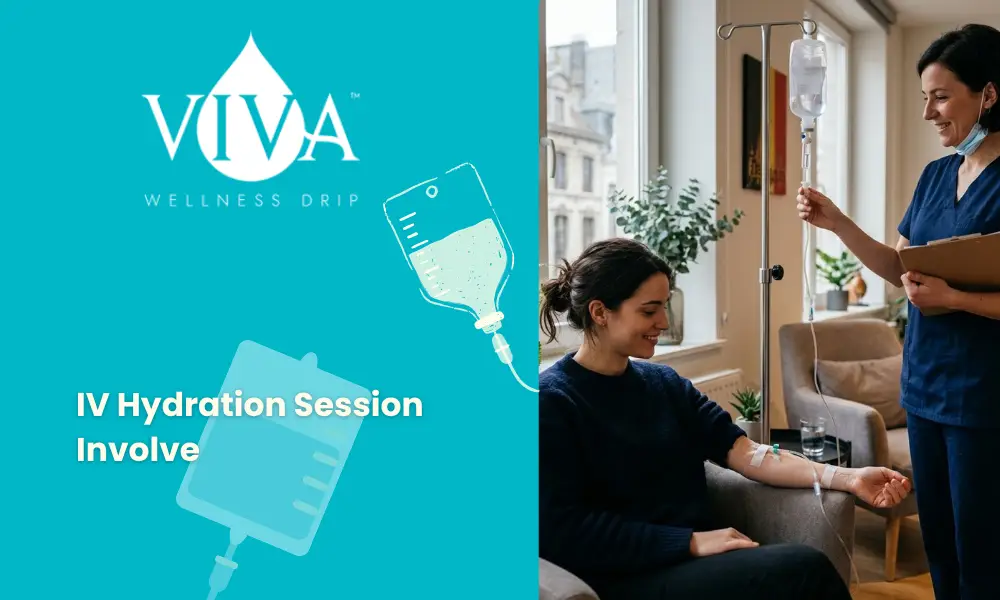
The nurse confirms your identity and history, explains the formulation, and answers questions. Equipment comes out of a sealed transport case: the fluid bag, an administration set, catheter, antiseptic, gloves, dressing, and a sharps container.
You choose where to sit. A comfortable chair with an armrest is ideal.
3. Baseline Observations
Numbers before needles
Blood pressure, heart rate, and temperature are recorded. These are not ceremonial — they inform infusion rate and flag anything that should stop the appointment before it starts.
4. Vein Assessment and Site Preparation
Why it takes a moment
The nurse examines both arms, usually favouring the antecubital fossa or forearm. Dehydration makes veins less prominent, so a warm compress is common. The site is then disinfected with chlorhexidine and allowed to dry fully — a detail the Infusion Nurses Society Standards of Practice treat as non-negotiable, and rightly so.
5. Cannulation and Connection
The part people worry about
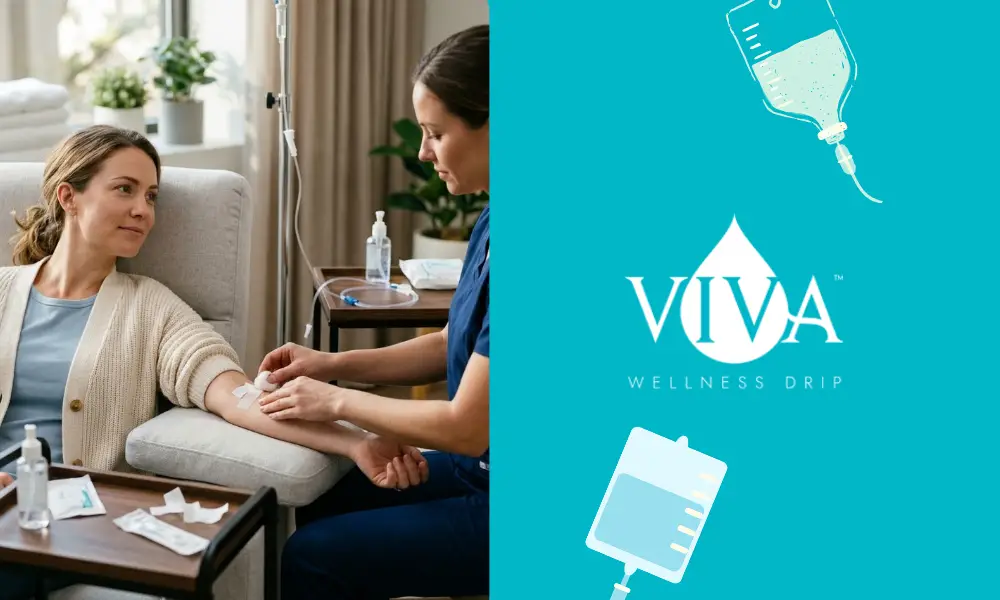
A short peripheral catheter is inserted, the needle withdrawn, the catheter secured, and the line connected. You feel it briefly. Most people are surprised by how quickly it is over.
6. The Infusion Itself
Thirty to forty-five minutes of nothing much
Rate is set deliberately. Isotonic fluid delivers the volume; the additives ride along. A blend built around zinc and vitamin C such as Immune Boost is a frequent choice through the long Belgian winter, while a magnesium-forward option like Anxiety Relief tends to be requested by people running on institutional deadlines.
The nurse remains present throughout, monitoring the site for infiltration and checking how you feel. Magnesium can produce a warm flush — expected, harmless, and worth being told about in advance.
7. Completion and Aftercare
The last five minutes
The line is flushed, the catheter removed, pressure applied, and a small dressing placed. Vitals are rechecked. All clinical waste and sharps leave with the nurse. You are given aftercare guidance: keep the dressing on a few hours, avoid heavy lifting with that arm, expect possible minor bruising.
Session Timeline
| Stage | Duration | What Happens |
| Arrival and consent | 10 min | History review, explanation |
| Baseline vitals | 5 min | BP, pulse, temperature |
| Site preparation | 5 min | Assessment, antisepsis |
| Cannulation | 2 min | Catheter placement |
| Infusion | 30–45 min | Monitored delivery |
| Removal and aftercare | 5 min | Flush, dressing, guidance |
Professional Perspective: The stage that reveals a provider’s quality is the first one, not the last. A nurse who spends ten minutes on history before touching anything is working to a protocol. A nurse who arrives, opens a bag, and starts looking for a vein is working to a schedule. In four years of appointments across this city, that has been the most reliable single indicator I know.
Who Should Not Have a Session
The honest exclusions
Uncontrolled cardiac failure, significant renal impairment, and certain electrolyte disorders are contraindications or require physician-specific direction. G6PD deficiency matters before high-dose vitamin C. Pregnancy requires individual assessment.
Cleveland Clinic’s clinicians also make the broader point plainly: IV vitamin therapy offers limited benefit to healthy, well-nourished people. A provider willing to say that is one worth trusting with the appointment.
Booking in Brussels
Ask who directs medically, what licence the attending clinician holds, what the bag contains, and what the all-in price is. Any competent provider answers in a sentence each.
Our nurses cover the Brussels service area including the city centre, Ixelles, Uccle, and the European Quarter, with every formulation published in full on our service menu. If you would like the procedure explained further before deciding, ask us directly — questions before booking are a good sign, not an inconvenience, and answering them properly is how Viva Wellness Drip prefers to work. Full coverage details for Brussels are here.
Frequently Asked Questions
How long does an IV hydration session take in Brussels?
Plan for 45 to 60 minutes in total, of which the infusion itself accounts for 30 to 45 minutes. Specialty protocols run longer.
Does the cannulation hurt?
Briefly, for a second or two. Most people describe it as comparable to a blood draw and are surprised how quickly the sensation passes.
Can I work during an IV session?
Light desk work with your free arm is possible, though the arm with the catheter should stay reasonably still. Most people find it easier to simply rest.
Is IV hydration regulated in Belgium?
Infusion therapy operates under medical direction and must be administered by appropriately qualified healthcare personnel. Confirm both with any provider before booking.
Can a nurse come to a Brussels hotel or office?
Yes. Hotels, apartments, and offices across the city are standard service addresses, subject to the building’s visitor policy.