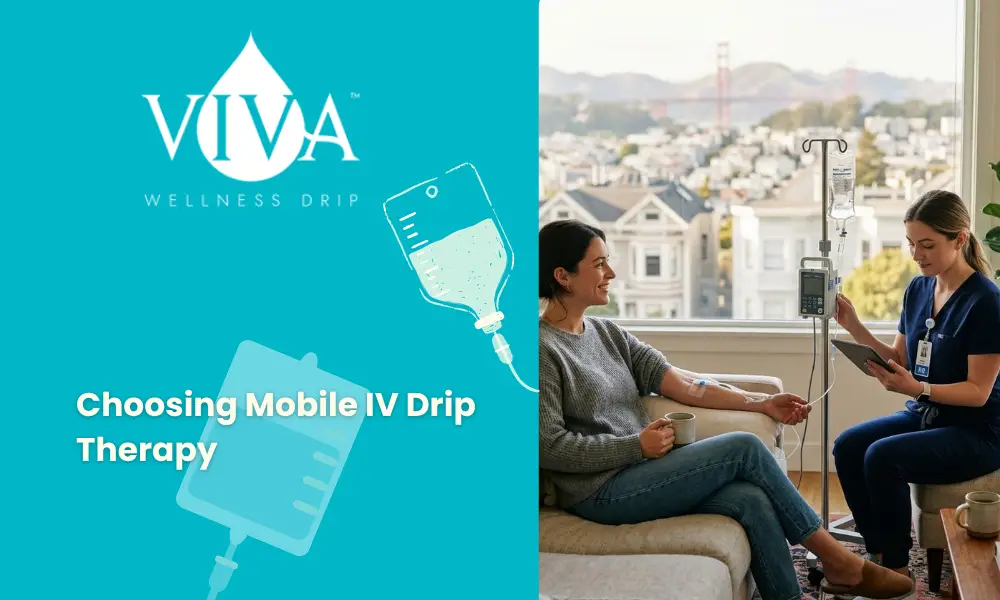
San Francisco was the market that convinced me mobile infusion had staying power. Not because of the wellness culture — every city has that now — but because of the parking. I once watched a client in Nob Hill weigh a $180 clinic appointment against forty minutes of circling and a garage fee, and choose the house call without blinking.
That is the unglamorous truth beneath a lot of this industry’s growth. But there are better reasons too, and after years of appointments across the Marina, SoMa, the Mission, and out to the Sunset, these are the six that come up most.
1. The City Makes Getting to a Clinic Genuinely Hard
Forty-nine square miles, and none of them easy to park in
Between hills, one-way grids, garage pricing, and a transit system that is excellent until the moment you feel unwell, leaving home in San Francisco carries a real cost. Mobile infusion removes the entire logistics problem, which matters most on exactly the days you feel worst.
2. Tech Schedules Do Not Match Clinic Hours
The 7 a.m. and 9 p.m. problem
A meaningful share of this city works hours that a nine-to-five infusion lounge cannot serve. Early-morning and late-evening appointments are the fastest-growing slots we run here, booked by people who genuinely cannot take a weekday afternoon.
Our nurses cover the full San Francisco service area across extended hours, which is a scheduling decision driven entirely by client demand rather than any grand strategy.
3. Dense Living Means Faster Illness Transmission
Why immune-focused drips spike here every winter
Shared elevators, packed transit, open-plan offices, and one of the highest housing densities in the country make San Francisco a very efficient place to catch something. Zinc and vitamin C blends such as Immune Boost see their heaviest demand from November through February.
Worth calibrating expectations honestly: the NIH clinical fact sheet on zinc is clear that supplementation supports immune function in people who are deficient, and is far less dramatic in people who are not.
4. Recovery Culture Has Moved Past the Weekend
Longevity, not hangovers
San Francisco’s interest in infusion skews toward performance and longevity rather than recovery. NAD+ protocols such as NAD attract a disproportionate share of bookings here compared with other markets we serve.
I will give you the professional version rather than the marketing one: the human research on IV NAD+ is early, the infusion must run slowly to be tolerable, and anyone promising you a decade back is selling something. It is an interesting molecule with a thin evidence base, and you should book it knowing that.
5. Privacy Is Not a Luxury Here, It Is a Norm
One-to-one, in your own space
Shared-recliner drip lounges have never taken hold in San Francisco the way they have in Los Angeles or Miami. People here prefer their health care private, and a home appointment delivers a nurse whose entire attention is on one patient.
6. The Microclimate Dehydrates You Without Warning
Cold does not mean hydrated
Fog, wind, and 55°F afternoons suppress thirst signalling while you keep losing fluid — through respiration, through activity, through indoor heating. People chronically under-drink in cool climates for precisely this reason. Mayo Clinic’s overview of dehydration causes and symptoms notes that older adults and anyone with a blunted thirst response are especially prone to it.
Mobile Versus Clinic in San Francisco
| Factor | SF Clinic Visit | Mobile at Home |
| Travel and parking | 30–60 min, $15–$40 | None |
| Appointment window | Business hours | Early, late, weekend |
| Privacy | Shared room | Private |
| Nurse attention | Split | One-to-one |
| Base cost | $150–$250 | $250–$400 |
| Total time cost | 90+ min | 45–60 min |
Professional Perspective: The mistake I see in San Francisco is treating an infusion as a substitute for a sleep schedule. We have clients who book monthly and still run on five hours a night, and no bag fixes that. The people who get real value here use infusion as a targeted tool — travel recovery, illness, a brutal quarter-end — and fix the fundamentals separately.
Deciding Whether It Fits You
If leaving home is the obstacle, if your hours are unusual, if you value privacy, or if you are actually unwell, mobile is the right model. If you want the cheapest possible drip and have a free weekday afternoon, a lounge will serve you fine.
For everything in the first category, our licensed nurses serve San Francisco daily and publish every formulation on our full service menu, so you can compare ingredients rather than marketing names. If you are new to this and unsure where to start, talk to our team first — we would rather point you to the simple option than upsell you. That is also why we built Viva Wellness Drip around published protocols instead of proprietary blends.
Frequently Asked Questions
How much does mobile IV therapy cost in San Francisco?
Expect roughly $250 to $400 for a standard hydration or vitamin infusion, with NAD+ and other specialty protocols priced higher. Confirm whether travel and after-hours timing are included before booking.
Can a nurse come to a San Francisco apartment building?
Yes. High-rise and secured buildings are routine — you simply need to authorise the visitor at the front desk or buzz the nurse in, the same as any other appointment.
How long does a NAD+ infusion take?
Considerably longer than a standard drip. Depending on dose, expect ninety minutes to several hours, because infusing NAD+ quickly causes chest tightness, cramping, and nausea.
Is mobile IV therapy available same day in San Francisco?
Usually, though weekday mornings and Sunday slots fill fastest. Booking the night before secures your preferred window.
Do I need to be sick to book an IV drip?
No, but you should have a reason. A good provider will screen you and, when a drip is not indicated, tell you so.