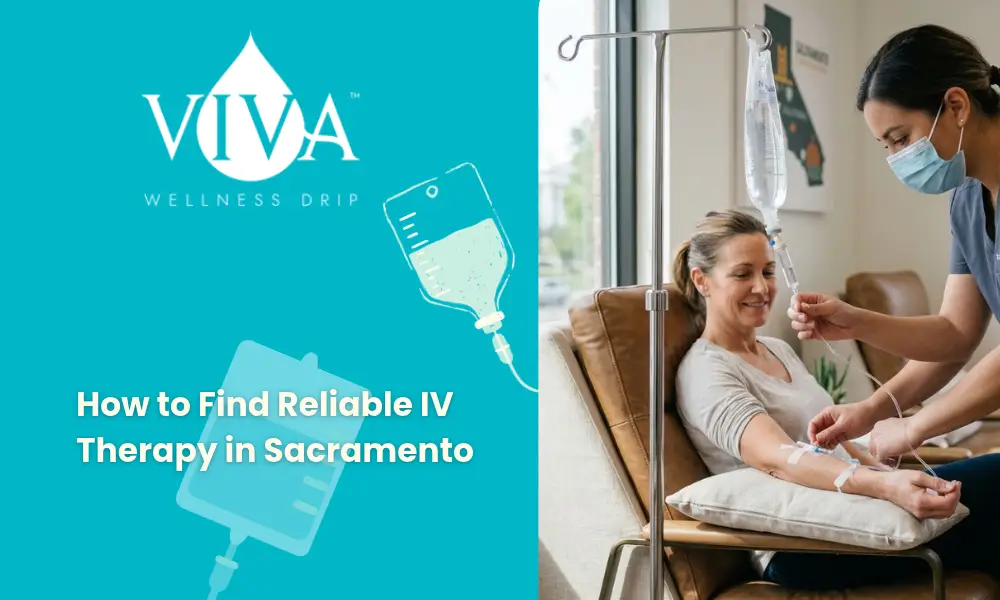
Sacramento summers don’t ease you in. By July, triple-digit afternoons are routine, the Delta breeze shows up late if at all, and anyone who spent the morning on the American River Parkway or the afternoon at a Midtown street festival feels it by dinner. That’s a big reason IV therapy has spread from a couple of downtown storefronts to mobile nurses covering Roseville, Folsom, Elk Grove, and Davis.
Over the past decade I’ve watched dozens of infusion visits from the patient’s side of the chair, and I’ve interviewed nurses and medical directors about what separates careful operators from risky ones. The difference rarely shows up on a website. It shows up in the answers to a handful of pointed questions. Here is the process we use, step by step.
1. Start With the License, Not the Logo
Look the nurse up yourself
In California, starting an IV is a clinical act. It belongs to a registered nurse, nurse practitioner, physician assistant, or physician working under physician oversight. Ask for the name of the clinician who will treat you, then check it through the Board of Registered Nursing’s license verification tool. It takes a minute and shows license status plus any public discipline.
Why we never skip this
Early in my reporting, I assumed every company in this space vetted its staff. Most do. A few did not. A lookup costs nothing and removes the guesswork.
2. Find Out Who the Medical Director Is
Behind every legitimate IV service sits a medical director who writes protocols, approves formulas, and is accountable when something goes sideways. You should be able to learn that physician’s name on request. If the company can’t, or won’t, tell you who signs the standing orders, you’ve learned what you need to know.
3. Expect a Real Medical Intake
What a proper screening asks
A good-faith exam, often by video, should cover your medications, allergies, recent illness, pregnancy status, and any history of heart, kidney, or liver disease. On arrival, the nurse should check blood pressure and pulse before placing the catheter.
The risk it protects against
For most healthy adults, a liter of isotonic crystalloid over 45 minutes is uneventful. For someone with heart failure or reduced kidney function, the same bag can trigger fluid overload. Screening exists for exactly that person, so a provider who rushes through it is cutting the one corner that matters most.
4. Ask Where the Ingredients Come From
Sourcing is a safety issue
Vitamins and medications added to a drip should come from a licensed pharmacy or a registered 503B outsourcing facility. The FDA explains how outsourcing facilities are regulated, including manufacturing-quality standards and inspections. Ask the company which route it uses.
Storage in Valley heat
A car trunk in August can get far hotter than the outdoor air. Ask how supplies are kept cool between visits. Experienced teams use insulated, temperature-controlled cases and can describe them without hesitation.
5. Match the Drip to Why You Need It
Most formulas begin with normal saline or lactated Ringer’s, then layer in electrolytes, B-complex, vitamin C, or magnesium. If you want a broad, multi-ingredient option, a comprehensive formula such as The Ultimate is built for people who want several goals covered in one session. If you prefer a classic vitamin-and-mineral blend, the Myers’ Cocktail style of drip, which typically pairs magnesium and calcium with B vitamins and vitamin C, has been used for decades. Either way, ask your provider to list every ingredient before the nurse spikes the bag.
6. Compare Your Options Side by Side
Sacramento residents generally choose between three formats. Each has a place.
| Consideration | Mobile IV Service | Clinic or Drip Lounge |
|---|---|---|
| Where it happens | Home, office, hotel, or event | Fixed location |
| Getting there | No drive, no parking | Commute in summer heat |
| Privacy | Your own space | Often semi-private chairs |
| Scheduling groups | Easy for families or teams | Limited by seats |
| Pricing | May include a travel fee | Base price is often lower |
| Good fit for | Feeling unwell, busy days | Quick visits near work |
7. Get Pricing and Aftercare in Writing
No surprises at the door
Ask for an itemized quote covering the base drip, add-ins, travel or after-hours fees, and group rates. Reputable companies send it before booking.
Pro Tip: Before you hang up, ask, “If my arm swells or I feel faint during the drip, what does your nurse do?” The right answer comes immediately: stop the infusion, assess, and act. A hesitant answer tells you more than any five-star review.
What happens after the catheter comes out
Your nurse should stay for the entire infusion, inspect the site, dispose of needles in a sharps container, and leave a phone number for follow-up questions.
8. Confirm Coverage Across the Region
Greater Sacramento sprawls well beyond the grid downtown. Before booking, confirm the service actually reaches your neighborhood, whether that’s East Sac, Natomas, Land Park, or out toward El Dorado Hills, and ask for a realistic arrival window. You can review coverage on our Sacramento mobile IV therapy page.
How Viva Wellness Drip Approaches Sacramento
At Viva Wellness Drip, we designed our mobile service around the same checklist you just read: licensed nurses, medical oversight, a proper intake, and transparent quotes. Browse our IV therapy services to compare hydration, recovery, and wellness formulas, then schedule IV therapy in Sacramento at your home or office.
The Bottom Line
Reliable IV therapy is less about the menu and more about the people and processes behind it. Verify the license, meet the medical director on paper, and insist on screening. Do that, and you can relax in your own living room while Viva Wellness Drip handles the rest.
Frequently Asked Questions
How do I know if an IV therapy provider in Sacramento is legitimate?
A legitimate provider uses licensed clinicians, names its medical director, and completes a medical intake before any infusion. You can confirm a nurse’s license through the California Board of Registered Nursing. Ask where ingredients are sourced, and expect an itemized quote before you book a visit.
How much does IV therapy cost in Sacramento?
Prices vary by formula and format. Basic hydration drips usually cost less than multi-ingredient or specialty infusions such as NAD+, and mobile visits may add a travel or after-hours fee. Request an itemized quote that lists the base drip, add-ins, and any extra charges before you commit.
Can IV therapy help with heat exhaustion in Sacramento summers?
IV fluids can rehydrate people who are mildly dehydrated after heat exposure, but heat exhaustion with confusion, fainting, or vomiting needs emergency care, not a wellness drip. Signs of heat stroke require a 911 call. For mild dehydration, a screened mobile IV visit is one option among several.
How long does an IV therapy session take?
Most sessions take 30 to 60 minutes for the infusion itself, plus around 10 to 15 minutes for intake questions, vital signs, and catheter placement. Slower infusions, including NAD+, can take two hours or more, so plan your day accordingly and ask your provider for a time estimate.
Is IV therapy safe for everyone?
No. People with heart failure, advanced kidney disease, certain electrolyte problems, or allergies to specific ingredients may not be good candidates. Pregnant clients should speak with their own physician first. A thorough screening by a licensed provider is designed to identify these risks before treatment starts.