September marks the start of Cusco’s dry season, and with it, the beginning of prime trekking conditions for the Inca Trail, Salkantay, and the wider Sacred Valley. It’s one of the best months to visit — but Cusco sits at roughly 3,400 meters above sea level, and altitude adjustment deserves real planning, not an afterthought.
Before You Arrive: Know What Altitude Actually Does
At Cusco’s elevation, the air contains meaningfully less oxygen than at sea level, and the body responds by increasing respiratory rate and accelerating fluid loss — often before any symptoms of altitude sickness show up. Most visitors underestimate how much this alone affects hydration needs, treating altitude fatigue as simply “part of the trip” rather than something manageable.
During Acclimatization: The First 48 Hours Matter Most
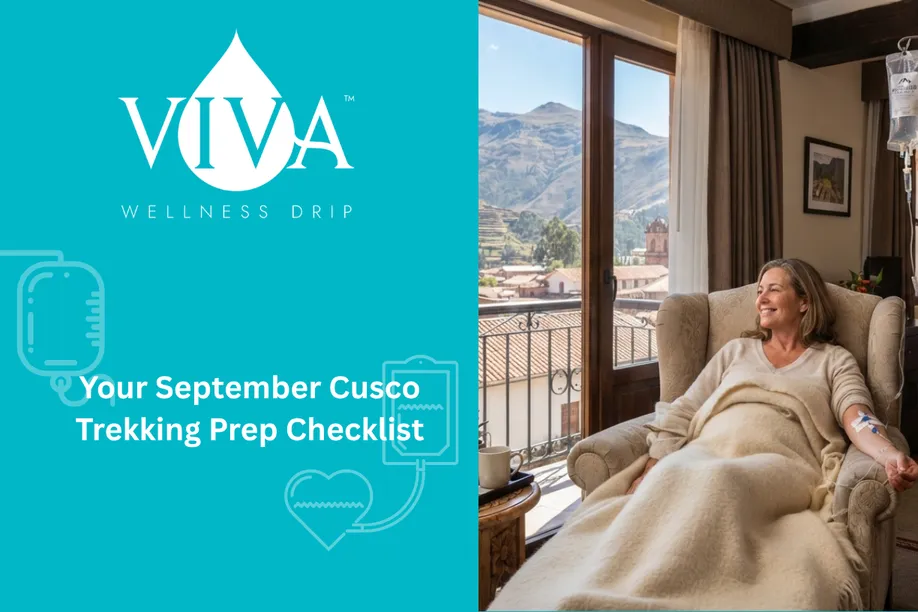
The standard advice to rest for a day or two before trekking exists for good reason, but rest alone doesn’t always correct the fluid and electrolyte imbalance that altitude creates. A session scheduled shortly after arrival, before setting out on any trek, can meaningfully support the acclimatization window rather than simply waiting it out.
What to Include in an Altitude Support IV Drip
The most requested formulation for Cusco pairs isotonic saline with electrolyte replenishment, directly addressing the accelerated fluid loss that comes with reduced oxygen availability. Glutathione is frequently added to help manage the oxidative stress that altitude places on the body, while B-complex vitamins support the sustained energy trekkers need before setting out toward Machu Picchu.
Before the Inca Trail: A Pre-Trek Session
Many trekkers specifically schedule a session the evening before starting a multi-day trek, ensuring their body is as close to fully hydrated and acclimatized as possible before days of demanding trail conditions with limited access to medical support. You can explore the full IV drip menu to find the altitude-focused formulation that fits your trekking schedule.
After the Trek: Recovery Before Your Next Stop
Trekkers returning from multi-day routes like Salkantay often move directly on to Machu Picchu or their next destination, without a real recovery day built in. A session on return to Cusco addresses the physical toll of the trek itself, layered on top of the ongoing altitude adjustment.
What About Continuing on to Machu Picchu Itself?
Many trekkers don’t end their journey in Cusco — the Inca Trail and Salkantay routes both culminate at Machu Picchu, which sits at a notably lower elevation than Cusco, around 2,430 meters. This drop in altitude might sound like relief, but the transition itself, combined with several more hours of walking through the ruins, adds another distinct phase of physical demand right when trekkers are often at their most fatigued from the days before.
Visitors who take the train directly to Machu Picchu without trekking face a different but related challenge: a rapid shift from Cusco’s high elevation down to the lower altitude of Aguas Calientes and the ruins, followed by a full day of walking through an extensive site with limited shade and significant elevation changes within the ruins themselves. The excitement of finally reaching Machu Picchu after days of anticipation often means visitors push through fatigue they’d otherwise address, treating exhaustion as simply part of the experience rather than something to manage.
Why Cusco’s Dry Season Draws Visitors From Around the World
September’s arrival marks the real beginning of Cusco’s tourist high season, which runs through October alongside the dry weather. Clear skies, minimal rainfall, and stable trail conditions make this window particularly attractive for trekkers who’ve spent months training and planning for a specific trek date. That planning intensity, though, sometimes means visitors are so focused on physical trekking preparation — cardio training, gear selection, boot break-in — that altitude adjustment itself becomes an afterthought, addressed only once symptoms like headache or nausea have already set in rather than planned for proactively from the moment of arrival.
The team at Viva Wellness Drip sends a registered nurse directly to hotels throughout Cusco’s historic center and the Sacred Valley. According to the CDC’s guidance on altitude illness, proper hydration is one of the most effective ways to reduce the severity of altitude-related symptoms, alongside gradual acclimatization. The Mayo Clinic’s overview of dehydration and the World Health Organization’s hydration fact sheet both reinforce how much altitude and physical exertion compound fluid loss. If you’re traveling with a trekking group, group bookings can be arranged for the full party before setting out.
Frequently Asked Questions
How high is Cusco, and why does that matter for hydration?
Cusco sits at roughly 3,400 meters above sea level, where reduced oxygen availability increases respiratory rate and accelerates fluid loss, raising overall hydration needs beyond what most visitors expect.
When should I book an IV drip before starting a Cusco trek?
Many trekkers schedule a session the evening before departure, supporting acclimatization ahead of days on the trail with limited access to medical care.
Is IV therapy helpful for altitude sickness symptoms?
Proper hydration is one of the recognized ways to reduce the severity of altitude-related symptoms, though it works alongside — not instead of — gradual acclimatization and rest.
Can Viva Wellness Drip serve hotels in the Sacred Valley as well as Cusco city?
Yes. The team travels throughout Cusco’s historic center and into the wider Sacred Valley region.
Should I book a session before or after a multi-day trek like Salkantay?
Both are common. A pre-trek session supports acclimatization, while a post-trek session addresses the physical toll of the trek itself, especially before continuing on to another destination. Full details are on the services page.