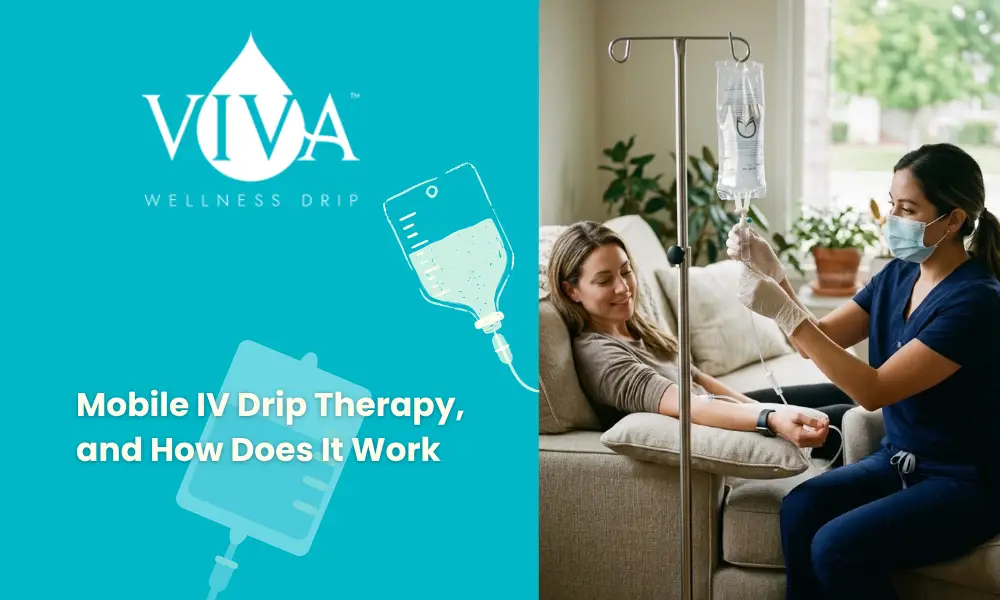
The first time I watched a mobile infusion run start to finish, it was in a Newport Beach condo at eight in the morning, and what struck me was how ordinary it looked. No equipment cart, no clinical lighting. A nurse, a folding pole, a chair by the window, and a conversation about kidney history before anything came out of the bag.
That is the honest answer to “what is it.” The longer answer is worth reading, because the parts people skip are the parts that matter. Here is how it actually works across Orange County, in seven stages.
1. It Starts With an Order, Not a Menu
The legal foundation most people never see
Mobile IV therapy is the delivery of fluids and micronutrients directly into a peripheral vein, administered in a non-clinical setting by a licensed clinician. In California, that clinician works under an order written by a supervising physician, nurse practitioner, or physician assistant.
You choose from a menu, but the order behind it is a medical document. Any Orange County provider that cannot explain this structure is not one to book.
2. Intake Comes Before Anything Else
A screening, not a formality
A proper intake covers renal and cardiac history, pregnancy status, medications, allergy history, and G6PD deficiency if high-dose vitamin C is on the table. Baseline vitals get recorded. This takes five minutes and is the single best predictor of a well-run service.
3. The Nurse Assesses Your Veins, Then Preps the Site
Why they warm your arm
Dehydration makes veins collapse and hide, which is a small irony given why you called. A warm compress and gravity solve most of it. The site is then cleaned with chlorhexidine using the technique laid out in the Infusion Nurses Society Standards of Practice, and the catheter goes in — usually the antecubital fossa or forearm.
4. The Base Fluid Does Most of the Work
Saline or lactated Ringer’s, and why it matters
Before any vitamin enters the conversation, you are receiving 500 to 1,000 mL of isotonic crystalloid. For genuine dehydration — a hot day in Irvine, a stomach bug, a hard session at the gym — this is the therapeutic component. Everything else is additive.
5. Additives Are Chosen for a Goal
Reading a formulation properly
B-complex, ascorbic acid, magnesium, zinc, glutathione, and antiemetics such as ondansetron are the common building blocks. A hangover-oriented blend like Hangover Relief pairs fluid volume with an antiemetic and B vitamins, which is a coherent combination for a specific problem. A blend that promises everything for everyone usually is not.
6. The Infusion Runs at a Controlled Rate
Slower is not stalling
A standard bag runs 30 to 45 minutes. Rate matters clinically — pushing fluid too fast is uncomfortable and, for anyone with cardiac or renal limitations, unwise. A nurse who opens the roller clamp wide to finish early is optimizing for their schedule, not your safety.
7. It Ends With a Flush, a Check, and Clean Removal
The last five minutes
Line flushed, catheter removed, pressure held, site dressed, vitals rechecked, sharps and waste bagged and carried out. Nothing clinical should remain in your home.
What the Experience Looks Like, Compared
| Element | Clinic Visit | Mobile at Home |
| Travel | You drive, twice | None |
| Privacy | Shared space | Your own room |
| Attention | Split across chairs | One-to-one |
| Duration | 30–45 min plus travel | 45–60 min total |
| Availability | Business hours | Extended, often same day |
| Cost | Lower | Higher, travel included |
Professional Perspective: Orange County’s geography is the variable nobody accounts for. A provider dispatching from a single location can quote you a two-hour window and miss it badly getting from Anaheim to San Clemente on a Friday. Ask whether nurses are distributed across the county or run from one hub. Ours cover Orange County from multiple points, which is a logistics decision, not a marketing one.
Who It Suits, and Who It Does Not
Mobile IV therapy suits people who are dehydrated, recovering, travelling, immunocompromised enough to prefer avoiding waiting rooms, or simply unable to leave. It does not replace emergency care. Chest pain, confusion, persistent vomiting, or a fever that will not break belongs in an emergency department, and any good nurse will tell you so and decline the appointment.
For everything within scope, our nurses serve Orange County daily, and the complete infusion service menu publishes every ingredient. A simple electrolyte drip such as Hydro Boost is where most first-timers start, and honestly, where most people should. If you are unsure what fits, ask us rather than guessing from a menu — and for background reading, the NIH fact sheet on vitamin C is a level-headed primer on what supplementation does at clinical doses.
Frequently Asked Questions
Does a mobile IV drip hurt?
You feel the catheter insertion for a second or two. After that, most people report only mild coolness along the vein. Magnesium can cause a warm flush, which is expected and harmless.
How do I know if I need IV therapy or just water?
Mild thirst is a water problem. Persistent dizziness, dark urine, cramping, and nausea that prevents you from keeping fluids down are the situations where IV delivery bypasses a gut that is not cooperating.
Can I get a mobile IV drip at a hotel in Orange County?
Yes. Hotels in Anaheim, Newport, Laguna, and Dana Point are routine service addresses, provided the property allows visitors and you have a private space.
How far in advance should I book?
Same-day is usually possible. Weekend mornings and holiday periods fill first, so book the night before if timing matters.
Is mobile IV therapy safe for older adults?
It can be, with proper screening. Cardiac and renal function determine both fluid volume and infusion rate, which is exactly why the intake step is not optional.