Mobile IV drip therapy can make sense in Palm Springs when desert heat has left you depleted and a nurse can bring fluids and electrolytes to you instead of the other way around. Summer highs in the Coachella Valley regularly pass 100°F, and between golf mornings, pool days, hiking trails and long hotel weekends, people lose a lot of water without noticing. I have written about wellness for more than ten years, and the lesson that matters most here is this: a drip is a comfort-and-support tool, never a replacement for drinking water, shade or emergency care. Below are six reasons our clients at Viva Wellness Drip ask about it.
What to Check Before You Book
Check who is responsible for the medicine before you check the menu. The California State Board of Pharmacy states in its IV hydration policy that IV hydration is a medical treatment needing an examination by an authorized prescriber, that adding vitamins or electrolytes is sterile compounding for trained, licensed personnel, and that IV clinics are generally unregulated in California. Ask for a named medical director, a patient-specific order and pharmacy-prepared or properly compounded bags, and have the nurse’s license ready to verify. Rules for mobile services can vary, so confirm what you need with the relevant California board.
Why Mobile Delivery Suits Palm Springs
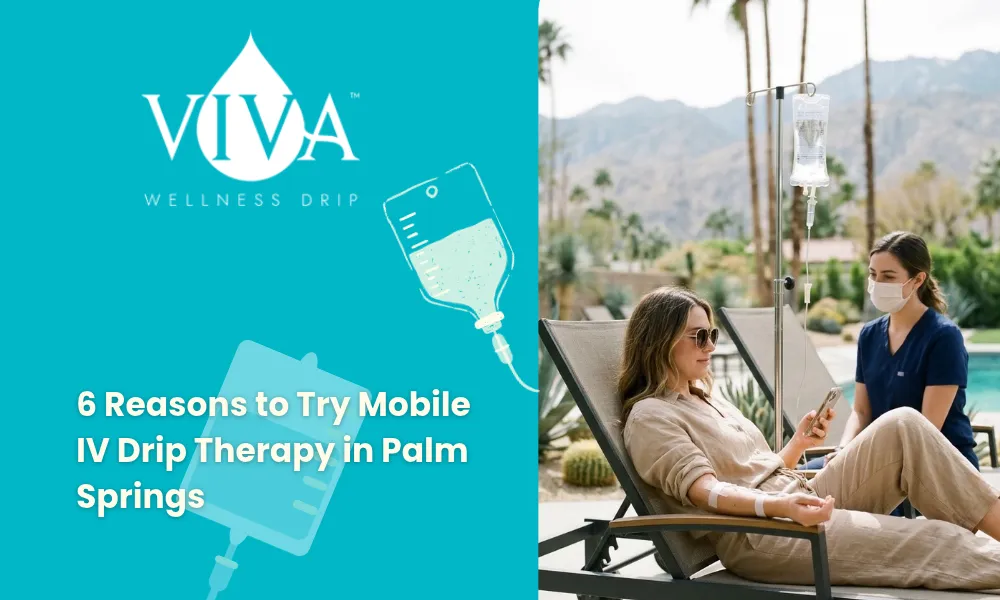
Mobile delivery suits Palm Springs because the hottest hours are exactly when nobody wants to be in a car. Visitors checked into a resort, seasonal residents and locals working through a summer afternoon can stay indoors in air conditioning while a registered nurse arrives with a medical director’s order behind the visit. Our Palm Springs team is built around that simple idea: less time outside, more time recovering.
1. You Are Dehydrated and Need Fluids Quickly
Best for
Visitors and locals who feel dizzy, headachy or drained after hours outdoors and cannot keep up by mouth. A Hydro Boost drip centers on fluids and electrolytes, usually in an isotonic base.
What we have learned
Heat can turn serious fast, and the hard-earned lesson is never to wave dizziness off as mere tiredness. The CDC lists warning signs such as heavy sweating, cramps, dizziness, nausea and weakness, and a drip is no substitute for emergency care.
2. You Would Rather Recover Indoors
Best for
Anyone caught between a hot car, a parking lot and a waiting room. Staying in a cool room matters when you already feel drained, and the cooler your surroundings, the less work your body does just to keep its temperature steady.
What we have learned
The biggest relief is often not having to move at all. We try to schedule around the hottest part of the day whenever possible, and many people simply rest with a book or a movie while the bag runs.
3. A Pool-Party or Festival Weekend Caught Up With You
Best for
Desert weekends that mix sun, alcohol and short sleep, a combination that dehydrates quickly, because alcohol increases urination while the sun and dry air take their own toll.
What we have learned
Fluids can ease the morning after, but evidence for added vitamin blends is mixed. Water, food and rest still do much of the work, and persistent vomiting needs medical care.
4. Golf, Hiking or Tennis Left You Depleted
Best for
Active visitors and residents who sweat heavily at midday and want electrolytes replaced without a car ride.
What we have learned
Prevention beats rescue. Drinking water throughout the day, sheltering from peak sun and pacing yourself will protect you better than any drip, and we would rather coach you on that than sell you a bag you did not need.
5. Stomach Bug Is Keeping Fluids Down
Best for
Guests and residents hit by vomiting or diarrhea who cannot rehydrate by mouth. Our Stomach Flu drip is the option people ask about in this situation.
What we have learned
Screening matters more here than anywhere. Fever, blood in stool, severe pain or confusion belong in urgent care, not on your couch, and a nurse will tell you so.
6. You Have Health Needs a Nurse Can Screen For
Best for
Older visitors and seasonal residents, who the CDC lists as being at higher risk of heat illness, and anyone with chronic conditions who wants a clinician to review their history first.
What we have learned
Heart, kidney or blood pressure conditions can change what is safe, so physician sign-off sometimes comes before the first drip, and we would rather wait a day for a clear answer than rush a visit that was never a good fit.
Quick Comparison
| Reason | What the drip supplies | Evidence | Caution |
|---|---|---|---|
| Dehydration | Fluids, electrolytes | Reasonable for fluids | Emergency signs need 911 |
| Indoor recovery | Convenience | Not applicable | None specific |
| Party weekend | Fluids, optional vitamins | Add-ons mixed | Persistent vomiting |
| Sports depletion | Fluids, electrolytes | Reasonable for fluids | Prevention first |
| Stomach bug | Fluids, electrolytes | Reasonable for fluids | Fever, bloody stool |
| Health screening | Clinical review | Case by case | Chronic conditions |
Pro Tip: Check your urine color. The CDC says light yellow or clear usually means you are drinking enough, and anything darker is a signal to drink more before you consider a drip.
Choosing the Right Option in Palm Springs
The right choice in Palm Springs is the one that fits your symptoms, your health history and the season. Explore our full service menu, meet the nurses at Viva Wellness Drip, or book a mobile visit in Palm Springs and let a nurse tell you plainly whether a drip makes sense for you, or whether water and a cool room will do.
Frequently Asked Questions
Can IV therapy treat heat stroke?
No. Heat stroke is a medical emergency that needs a 911 call and hospital care, not a house call. Signs include confusion, fainting, a very high body temperature and a lack of sweating, so seek emergency help immediately if you see them.
How do I know if I am dehydrated in Palm Springs heat?
Common signs include thirst, dark urine, headache, dizziness and fatigue. A light yellow or clear urine color usually means you are drinking enough, so check it throughout hot days.
Is a mobile IV better than drinking water?
For most people, drinking water and electrolyte drinks in a cool place is simpler and sufficient. An IV can help when nausea, illness or heavy fluid loss makes it hard to drink enough, but it is a supportive option, not an everyday habit.
How long does a mobile IV visit take?
Most standard drips run about 30 to 45 minutes once the nurse has set up. A pre-visit call to review your health history is part of the process.
Can I get an IV drip at my hotel or vacation rental?
Yes, our nurses can visit homes, offices and hotels, so you can recover in your own room. Share the room details and any health conditions when you book so the visit goes smoothly.